巴西大奖赛揭示F1应对雨水的能力
巴西大奖赛的混合天气条件首次让F1有机会检验新车在湿地上的表现,此前外界对雨战一直存在担忧。
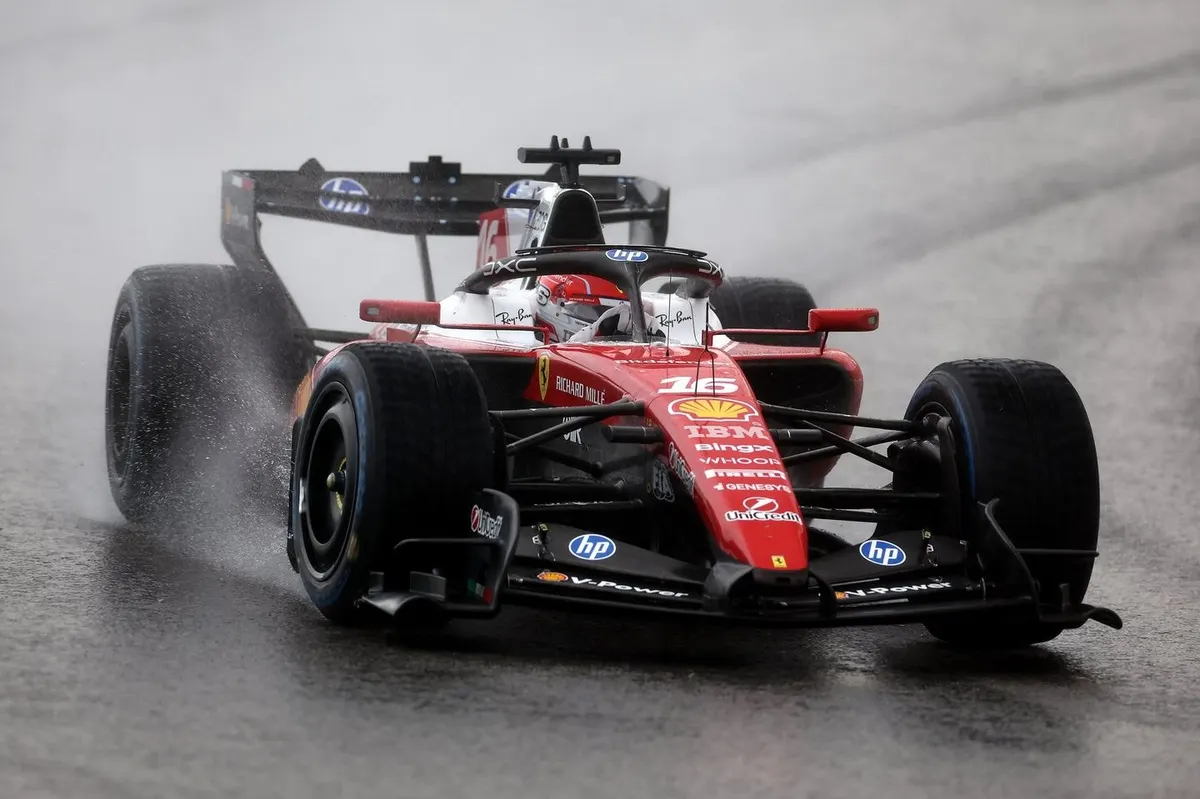
巴西大奖赛揭示F1应对雨水的能力
在受雨水影响的排位赛之后,正赛当天的混合条件首次提供了机会,来直面关于新车在湿地表现如何的担忧。
自赛季开始前,雨战可能发生的情况就一直困扰着F1的利益相关者。这也全年引发了一些不必要的歇斯底里式评论,在上周末英特拉格斯巴西大奖赛前夕达到顶峰,当时排位赛和正赛有雨几乎已成定局,为本赛季首次。
尽管在马来西亚举行的巴林大奖赛曾因雨水和发现软件故障而中断,但等到比赛开始时,赛道正在迅速变干。巴西的情况并非如此。
英特拉格斯赛道的排位赛因暴雨恰逢本节开始而被红旗中断80分钟,事后许多媒体纷纷援引乔治·拉塞尔一句颇为辛辣的言论。
“我喜欢在这里的雨中驾驶,但到了某个节点,如果那是一场正赛,我们绝不该在那种条件下继续驾驶,因为发生极其可怕事故的概率非常非常高,”他说。
这堪称制造喧闹新闻的完美标题素材,但缺乏上下文。那节排位赛之后,围场内的普遍共识是国际汽联在正确的时间做出了正确的决定:在最初暴雨来袭时立即中止第一节排位赛,随后以极大的严谨态度寻找安全的‘窗口’重新开始。
“总的来说,我想比赛,但昨天(周六)我认为那是完美的决定,”法拉利车队领队弗雷德里克·瓦塞尔在正赛后说。
“当我们在红旗出现前完成第一圈[Q1]时,赛车回来时车里积了两厘米深的水……”
夏尔·勒克莱尔,法拉利车队;卡洛斯·塞恩斯,威廉姆斯车队;阿维德·林德布拉德,小红牛车队
那样的条件太湿了,除了在维修区里赛船之外,任何形式的赛道活动都无法进行。真正的问题在于,赛车和最新一代轮胎在那种潮湿和/或快速变化的状况下会有怎样的表现——而排位赛和正赛恰恰有可能正是在这种状况下进行的。
从历史上看,倍耐力带有深花纹的“极端”雨胎很少被使用,因为它们工作窗口的很大一部分都落在被认为可接受的比赛条件范围之外。它们能排开大量积水,但随着赛道变干,胎面块会过快过热。等到赛道湿到足以证明使用“极端”雨胎合理时,通常红旗已经迫在眉睫。
因此,半雨胎一直是湿地条件下的首选,但据了解,今年的半雨胎太“硬”,升温太慢。鉴于测试限制,倍耐力一直无法用本赛季规定的更窄轮胎完成同等条件的测试。
长期以来,人们一直担心新半雨胎抓地力不足,再加上最新一代发动机更猛烈的扭矩输出,会使2026年的F1赛车在湿地条件下危险到无法驾驶。因此,巴西大奖赛周末前出现了恐慌情绪。
实际发生的事情没有那么戏剧化,也更微妙。英特拉格斯赛道路面的性质意味着可驾驶性偶尔会成为问题,但并非总是如此。在幕后,国际汽联自年初以来一直在做大量工作,以管理这些条件下的动力输出。
亚历山大·阿尔本,威廉姆斯,卡洛斯·塞恩斯,威廉姆斯
排位赛——一旦开始——曾让人燃起希望,认为“极端”雨胎如今更实用了,但半雨胎的问题则稍多一些。基米·安东内利在前往发车格的圈中于茹卡奥弯冲出赛道,另有数位车手反映,当最后10圈的降雨迫使大家换回半雨胎时,他们的赛车又变得难以驾驭。
“我认为好的一点是,我们比过去能更多地使用‘大雨胎’,”瓦塞尔说。“这是好事,因为当情况更接近‘大雨胎’或介于两者之间时,它不会逼着你去用半雨胎,从而让你冒风险。
“我觉得排位赛相当不错……但抓地力也完全不同。你今天在前往发车格的圈里看到,所有人都跟见了鬼一样。我认为在这些条件下,这是一条很难的赛道。”
倍耐力明年的目标是把雨胎配方的性能拉得更接近,让半雨胎升温更快,‘极端’雨胎更耐磨损。但这在工程上是个挑战,因为各条赛道在轮胎所承受的能量方面差异太大。
“很难让它们升温,但它们也磨损得相当快,”在巴西站获得第15名的亚历克斯·阿尔本说道。
“所以即使它们处于低温状态,也在磨损,感觉它们永远不会过热,或者永远达不到工作温度。然后等到你开始跑圈时,胎面已经脱落了,然后你就已经陷入挣扎,四处打滑。所以,在比赛的任何时刻你都感觉不好;它从来都不像是进入了工作状态。”
这可以解释开场几圈的一些异常现象:排在发车格前列的车手发现自己不得不格外谨慎,因为他们感受不到抓地力——而一些排在后面的车手,等待熄灯的时间更短,却获得了强劲的起步。
即便在这些人当中也存在差异:马克斯·维斯塔潘和刘易斯·汉密尔顿分别从发车格第20位和第21位迅速杀入前十,但随后汉密尔顿又掉了回去,因为他的赛车出现了严重的转向过度甩尾。维斯塔潘和基米·安东内利一样,随后发现自己的赛车在使用光头胎时性能下降。
湿地条件增加了排位赛的戏剧性
干湿两种轮胎配方下性能表现参差不齐,这很难理清,但共识仍然是雨胎需要更多研发。有一些小抱怨,但并没有出现人们所担心和大声预测的灾难。
卡洛斯·塞恩斯表示:“我认为半雨胎和全雨胎的水平还不够好,我们需要与倍耐力合作寻找更好的轮胎,因为在混合条件下,半雨胎的后轮仍然是非常弱的轮胎。等它升温时,前轮已经不行了。”
“而全雨胎,说实话,昨天我们打滑太多了,后轮抓地力严重不足,所以这两款轮胎仍然缺少一些研发。”
虽然本周末在多种不同条件下收集到的数据会很有用,但这仍然只是一个孤立的例子。鉴于路面和环境温度的差异,在英特拉格斯奏效或不奏效的做法,未必能照搬到其他地方。
“我会说相当棘手,”这是利亚姆·劳森对驾驶2026年F1赛车在湿地比赛的评价。
“今天最大的问题是环境温度比昨天低得多。所以即使积水更少,在驶向发车格的圈里赛车几乎无法驾驶,而且温度还在不断下降。
“所以,我们撑过了比赛开始阶段,但在雨下得很大的时候,半雨胎就变得……并不是说积水太多,而是你实际上无法保持轮胎温度。所以,如果我们在像拉斯维加斯这样的赛道上遇到下雨,老实说,我认为我们会陷入麻烦。
“但总的来说,很明显我们第一次用这些轮胎完整度过了一个比赛周末。”
补充报道:Roberto Chinchero 和 Guilherme Longo
英文原文
What the Brazilian GP revealed about F1's ability to cope with rain
Mixed conditions on race day, following a rain-affected qualifying session, was the first opportunity to confront fears about how the new cars would perform in the wet
The question of what might happen in a wet race has vexed Formula 1's stakeholders since before the beginning of the season. It's also prompted some unnecessarily hysterical commentary throughout the year, peaking in the run-up to last weekend's Brazilian Grand Prix at Interlagos, where rain for qualifying and the race was a virtual certainty for the first time this season.
Although the Bahrain Grand Prix in Malaysia was interrupted by rain and the discovery of a software glitch, by the time the race got going the track was drying quickly. This was not the case in Brazil.
Qualifying at Interlagos was red-flagged for 80 minutes after a downpour coincided with the start of the session, and many media outlets alighted on a spicy George Russell quote in the aftermath.
"I love driving in the rain here but, at some point, if that was a race, there was no way we should be driving in that because the chances of seeing a really, really horrific incident are very, very high," he said.
Perfect headline material for a noisy story, but context was lacking. The general consensus within the paddock after that session was that the FIA made the right calls at the right time, immediately suspending Q1 during the initial downpour, then applying great rigour to identify a safe ‘window' to restart it.
"In general, I want to race, but yesterday [Saturday] I think it was the perfect call," said Ferrari team principal Frederic Vasseur after the race.
"When we did the first [Q1] lap before the red flag, we came back with two centimetres of water in the car…"
Charles Leclerc, Ferrari, Carlos Sainz, Williams, Arvid Lindblad, Racing Bulls
Those conditions were too wet to stage any kind of track activity beyond a boat race in the pitlane. The real questions surrounded how the cars and the latest generation of tyres would perform in the kind of wet and/or rapidly changing circumstances in which qualifying and the race could actually be staged.
Historically, Pirelli's heavily treaded ‘extreme' wet tyres are rarely seen, since too much of their operating window sits outside the margin of what is considered to be acceptable racing conditions. They displace massive quantities of water but the tread blocks overheat too quickly as the track dries. By the time the track is wet enough to justify the ‘extreme' tyre, a red flag is usually imminent.
The intermediate tyres have therefore been the wet-weather boots of choice, but this year's are understood to be too ‘hard' and slow to come up to operating temperature. Pirelli just hasn't been able to accomplish like-for-like running with the narrower wheels mandated for this season, given the testing restrictions.
It's long been feared that lack of grip from the new intermediates, combined with the more brutal torque delivery of the latest generation of engines, would make the 2026 F1 cars dangerously undriveable in the wet. Hence the outbreak of hysteria ahead of the Brazil weekend.
What actually transpired was less dramatic, and more nuanced. The nature of the track surface at Interlagos meant driveability was occasionally an issue, but not always. In the background, the FIA has been doing a lot of work since the beginning of the year to manage power delivery in these conditions.
Alexander Albon, Williams, Carlos Sainz, Williams
While qualifying – once it got started – offered some hope that the ‘extreme' wets are now more useable, the intermediates were a little more problematic. Kimi Antonelli went off at Juncao on his lap to the grid, and several other drivers reported their cars became a handful again when rain in the last 10 laps dictated a return to the intermediates.
"I think what is good is that we can use the 'big wet' much more than in the past," said Vasseur. "And this is good because it's not pushing you to use inter when it's a more 'big wet' situation, or mix between the two, and then you are taking risks.
"I think the quali was pretty good… but also the grip was completely different. You saw in the lap to the grid today that everybody was completely like hell. I think it's a difficult track with these conditions."
Pirelli's target for next year is to bring the performance of the wet-weather compounds closer together, so the intermediate warms up faster and the ‘extreme' is more resistant to wear. But this is a challenge to engineer because the tracks differ so much in terms of the energy going through the tyres.
"It was difficult to fire them up but they also wore quite quickly," said Alex Albon, who finished 15th in Brazil.
"So even when they're cold, they're wearing and it just feels like they never overheat, or they never level up to temperature. And then by the time you're circulating, the tread's already come off the tyre and then you're already struggling, you're sliding around. So, you never feel good at any point in the race; it never feels like it comes alive."
This would explain some of the peculiarities of the opening laps, where those at the front of the grid found themselves having to be super-cautious because they couldn't feel the grip – while some of those towards the rear, who spent less time waiting for lights-out, got strong getaways.
Even among those there was a variance: Max Verstappen and Lewis Hamilton quickly broke through to the top 10 from 20th and 21st on the grid, only for Hamilton to then go backwards as his car developed massive oversteer snaps. Verstappen, like Kimi Antonelli, then found his car less performant on the slicks.
Wet conditions added to the drama of qualifying
This mixed spread of performance over the wet and dry tyre compounds will be tricky to unpick, but the consensus remained that the wet-weather rubber needs more development. There were minor gripes but not the disasters that were feared and noisily predicted.
"I think the level of the wet and the inter is not good enough and we need to work with Pirelli on finding a better tyre," said Carlos Sainz, "because in the mixed conditions the inter is still a very weak tyre at the rear. By the time it warms up, the front is gone.
"And the extreme, honestly, yesterday we had so much sliding and a big lack of rear grip, so still missing a bit of development on these two tyres."
While the data gathered through running in many different conditions this weekend will be useful, it's still an isolated example. What worked or didn't work at Interlagos may not translate elsewhere, given variances in surfaces and ambient temperatures.
"Quite tricky I would say," was Liam Lawson's take on racing in the wet in a 2026 F1 car.
"The biggest problem today is the [ambient] temperature was much cooler than yesterday. And so even though there was less water, on the laps of the grid the cars were nearly undriveable, and the temps were just going down.
"So, we survived the start of the race but at points when it rains a lot, the inter becomes... it's not that the standing water's too much, it's that you can't actually keep the temperature in it. So, if we're on a track like Vegas and it rains, honestly, I think we're in trouble.
"But overall, obviously we got through a weekend for the first time with these tyres."
Additional reporting by Roberto Chinchero and Guilherme Longo
Motorsport.com ·
内容来自公开信源,聚合内容版权归原作者与来源所有。