维斯塔潘拒绝参与F1 2027年生物数据计划
F1宣布与Whoop合作,将在转播中使用车手生物数据,但马克斯·维斯塔潘表示他不会参与,主要出于隐私原因。
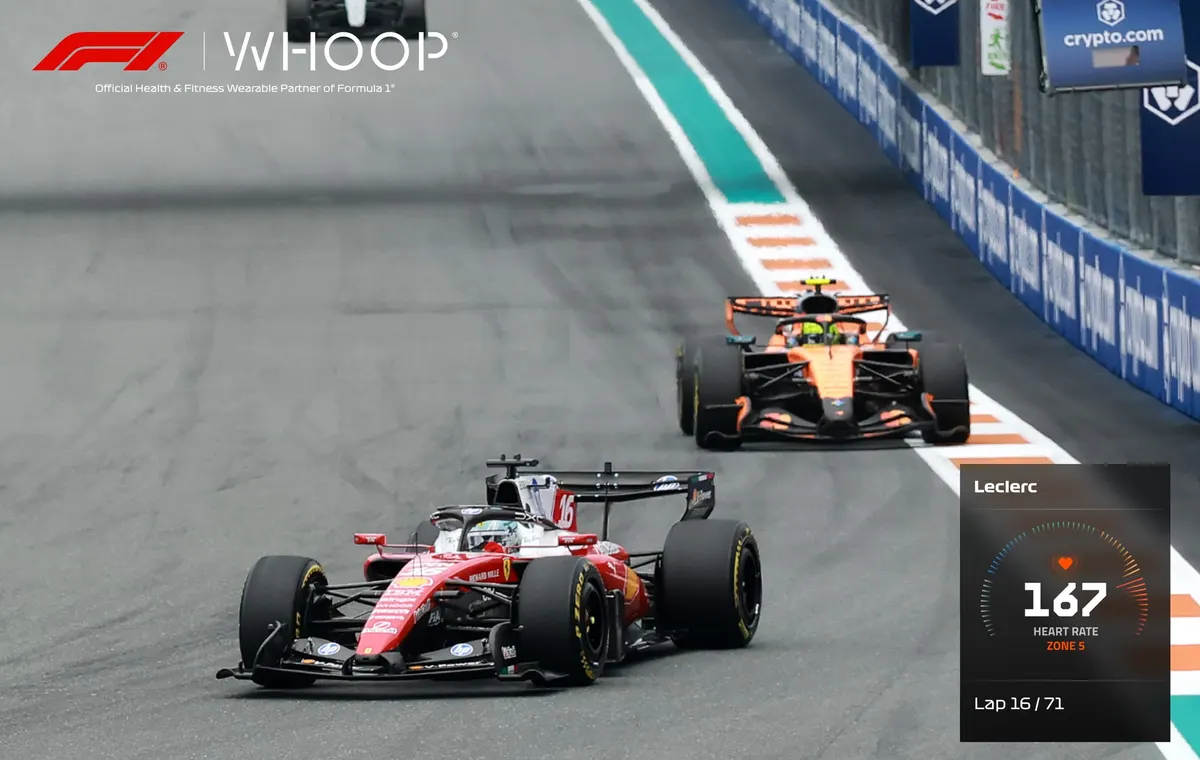
F1新近宣布与健康健身可穿戴技术专业公司Whoop合作,将在转播中使用车手生物数据,但马克斯·维斯塔潘表示他不会参与。
公告中的演示展示了如何将心率数据融入电视转播,并以夏尔·勒克莱尔在英国大奖赛和利亚姆·劳森在巴西站的信息为例。
Whoop设备可采集多种生物数据,已发布材料包含车手在各心率区间的时间分布,用于衡量其承受的整体压力。
公开使用数据的完整范围仍有待观察,但Whoop表示睡眠与恢复趋势及其与车手表现的关系也可能成为其叙事内容的一部分。
车手必须授权才能使用这些数据,但维斯塔潘不使用此类设备。他表示这主要是出于隐私原因。
“我不会参与,”维斯塔潘说。“我不用任何设备。而且,在我的训练中,我什么都不用,因为首先我不喜欢被追踪,而且我知道自己什么时候累了。”
维斯塔潘还表示,他不愿意公开此类数据,不过如果其他人愿意参与,他并不反对。“如果车手想要,当然可以,”他说。“这不是我喜欢的东西,也不是我想让人们看到或展示的东西。”
梅赛德斯车手拉塞尔接受运行这一方案,并且“不会说不”,但他对这对报道有多大好处表示怀疑。
他警告说,在比较不同车手的心率并据此得出结论时,这可能会被用来制造具有潜在误导性的叙事。“作为一个中立者,如果我坐在沙发上,我想我会很享受看这个,”拉塞尔说。
“但每个人都不一样。你有一个45岁的人,他的心率可能比一个18岁的人低不少。而当你坐在发车格上时,你会说费尔南多·阿隆索在灯灭时冷静如冰,因为他的心率低得多。把我72岁的父亲放进车里,他的心率会比费尔南多的还要低。
“即使是同龄人,心率也各不相同。我真的不知道这怎么能起到补充作用,如果这么说能理解的话,因为我们所有人都太不一样了。但这会制造一种叙事,对某些人来说是正面的,而我很幸运,我可以说我的心率偏低。
“我会同情一位天生心率就比别人每分钟高20拍的车手。所以是的,从一个中立者的角度,我觉得这很酷。我不会说不行,但我认为保持现状就挺好。”
勒克莱尔支持这一倡议,但附带说明他已经是Whoop的大使。他表示自己没有什么可隐瞒的,并且出于自身表现的原因已经使用Whoop技术有一段时间了。
“我没有什么特别需要隐瞒的,”勒克莱尔说。
“我现在是Whoop的大使,我已经使用这个设备很长时间了,用来追踪我的恢复情况、睡眠,还有我在车里的时候。现在实际上还有一个经过国际汽联认证的设备,我们可以不再隐藏它,在驾驶时佩戴,所以这是件好事。
“至少对我来说,它非常有用,而向所有人展示它是另一回事,我们肯定会讨论,但我个人对此没有任何问题。”
F1 TV 转播中此前已经出现过实时心率数据。最著名的是 1994 年巴西大奖赛,当时转播中出现了埃尔顿·塞纳的这类数据;而两年前在同一场比赛中,米纳尔迪车手克里斯蒂安·菲蒂帕尔迪的心率也被纳入转播。
不过,这将是 F1 直播转播中首次系统性地使用生物特征数据。
英文原文
Formula 1's newly announced partnership with health and fitness wearable technology specialist Whoop will utilise driver biometric data in broadcast coverage, although Max Verstappen says he will not be involved.
The announcement included demos illustrating how heart-rate data could be integrated into TV coverage, using Charles Leclerc's information from the British Grand Prix and Liam Lawson's from Brazil as examples.
Whoop equipment captures a wide range of biometric data, with the material released including a breakdown of driver time spent in various heart-rate zones to measure the overall stress they are under.
The full scope of what is used publicly remains to be seen, but Whoop has suggested sleep and recovery trends and how they relate to driver performance could also be part of the storytelling it does.
Drivers must give their permission for this data to be used, but Verstappen does not use such devices. He said this is primarily for privacy reasons.
"I won't be involved," said Verstappen. "I don't use any device. Also, for my training, I don't use anything because, first of all, I don't like to be tracked and I know when I'm tired."
Verstappen also said he is unwilling to show such data publicly, although raised no objections to others being part of this should they be willing to do so. "If drivers want to have that, sure," he said. "It's not something that I like, and also not what I want people to see or show."
Mercedes driver George Russell accepted this being run and is "not going to say no" to it, but he cast doubt on how beneficial it would be for the coverage.
He warned that it could be used to create potentially misleading narratives when it comes to comparing the heart rates of different drivers and drawing conclusions. "As a neutral, if I was sat on the sofa, I think I'd really enjoy seeing it," said Russell.
"But everyone's different. You've got a 45-year-old, his heart rate is probably going to be quite a bit lower than an 18-year-old's heart rate. And when you're sat on the grid, you'll be saying Fernando Alonso's ice-cool when the lights are going out because his heart rate is much lower. You put my dad in the car, who's 72, his heart rate's going to be even lower than Fernando's.
"Even people of the same age have different heart rates as well. I don't really know how it could be additive, if that makes sense, because we're all just so different. But it's going to create a narrative that's going to be positive for some, and I'm lucky that I'd say my heart rate's on the lower side.
"I would empathise with a driver whose natural heart rate sits 20 beats [per minute] higher than somebody else. So yeah, from a neutral, I think it's cool. I'm not going to say no, but I think it's OK as we are."
Leclerc backed the initiative, with the caveat that he is already an ambassador for Whoop. He argued that he has nothing to hide and has used Whoop technology for his own performance reasons for some time.
"I don't have anything to hide in particular," said Leclerc.
"I'm now an ambassador for Whoop and I've been using the device for quite a long time now to track my recovery, my sleep, but also when I'm in the car. And now there's actually an actual device also that is certified by FIA that we can, without hiding it anymore, wear it while I'm driving, so it's a good thing.
"At least for me, it's very useful, and to show it to everybody is another matter that we'll for sure discuss, but I personally don't have any problems with it."
Live heart-rate data has appeared in F1 TV coverage before. Famously, the 1994 Brazilian GP featured such data from Ayrton Senna, while two years earlier, at the same race, Minardi driver Christian Fittipaldi's heart rate was included.
However, this will be the first systematic use of biometric data in live F1 coverage.
The Race ·
内容来自公开信源,聚合内容版权归原作者与来源所有。