皮亚斯特里质疑拉斯维加斯直道速度差距异常
皮亚斯特里在拉斯维加斯排位赛获得第七名后,对迈凯伦与使用同款梅赛德斯动力单元的其他赛车之间的直道速度差距感到意外,但没有像队友诺里斯那样称其为“令人震惊”。
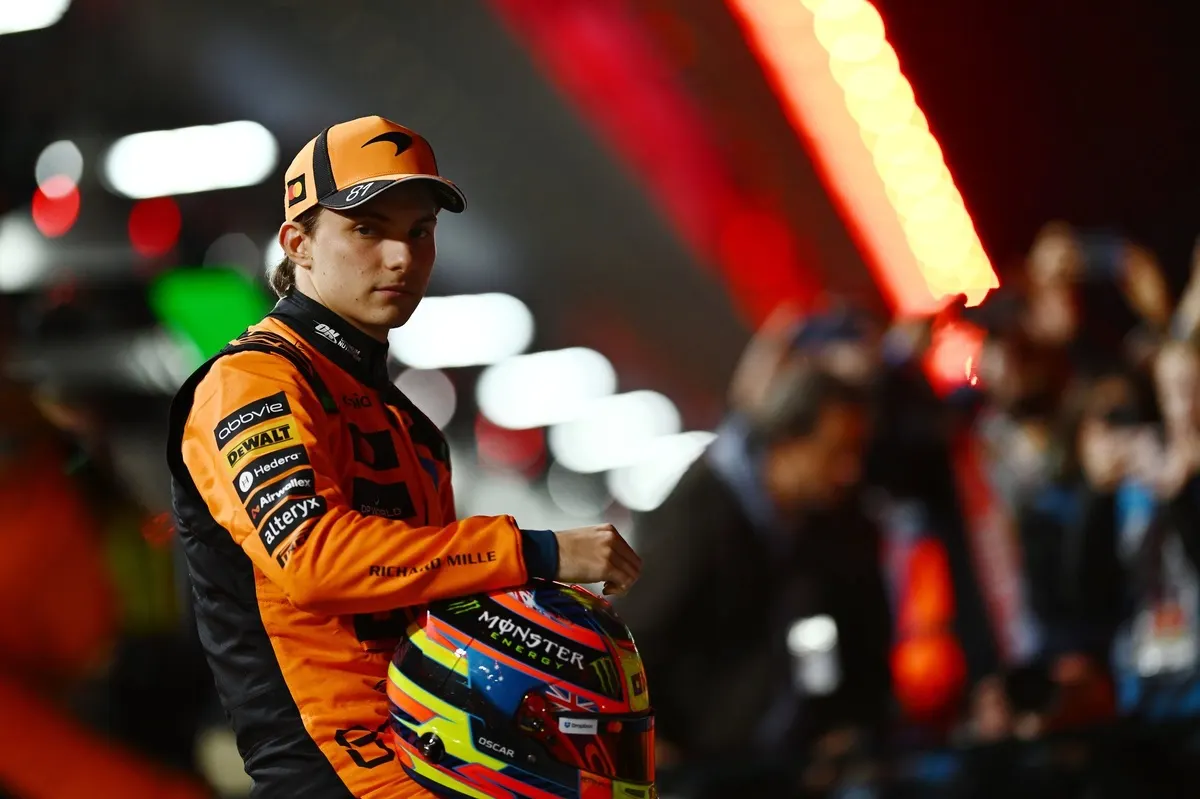
奥斯卡·皮亚斯特里质疑在拉斯维加斯对其他梅赛德斯动力赛车出现的“奇怪”速度差距
迈凯伦因既定的设计选择原本预计在拉斯维加斯直道速度上会吃力,但车手们赛后仍然感到失望
奥斯卡·皮亚斯特里没有附和队友兰多·诺里斯关于迈凯伦在拉斯维加斯直道速度“简直令人震惊”的说法。但他确实承认,与对手之间的差距幅度令人意外——尤其是相对于那些使用相同梅赛德斯动力单元的赛车。
皮亚斯特里在排位赛最后一节跑出第七快成绩,他形容自己的飞驰圈“混乱”,而诺里斯排名第五。由于本赛季启用第五台新内燃机(ICE),超出四台配额,皮亚斯特里无论如何都将接受罚退10位的处罚,不过他受益于梅赛德斯在FIA额外研发与升级机会(ADUO)框架下开发的新规格涡轮增压器。
“Q2之后,我对进展相当满意,”他说。
“然后Q3因为几个原因有点混乱。想找到合适的尾流……如果没弄对,那还不如干脆别出去。
“甚至在这里开启一圈时,我认为赛车之间也有点差异,它们在一号弯消耗多少能量,如果那是半秒,那可能就会变成这一圈后面直道上三四成的差距。
“所以很难做对,有几件事我们可能会复盘,看看能不能做得稍微好一点。但我的圈速也有点乱。”
迈凯伦为拉斯维加斯带来了一套新的底板规格,但只有一套及时完工,因此它被交给了诺里斯。结果,他的Q3表现因一个塑料袋缠在底板的一处“围栏”上而受到影响。
本赛季,MCL40在直线速度上一直挣扎,部分原因是空气动力学,但主要是因为车队选择了比一些对手更低的齿轮比。为了减轻重量,车队采用了允许范围内最短的轴距,这限制了后轮前方底板和车身可获得的空气动力学增益。
车队老板安德烈亚·斯特拉最近在接受Motorsport.com独家采访时也表示,齿轮选择是由对动力单元特性的预期决定的,而这些预期与最终成品并不完全一致。最大化动力单元的潜力一直是迈凯伦整个赛季都在努力解决的问题之一。
“说实话,很难知道,这让我们措手不及,”皮亚斯特里说。
“我不认为我们预料到这会是个这么大的问题。在蒙扎我们还可以,对我们来说奇怪的是,这主要是与其他梅赛德斯动力赛车相比。”
“所以,也许很多人减少了下压力,而我们减得不够,但看起来我们在练习中缺失的那一步相当大。”
“我不知道现在是否还是同样的情况,但无论如何,我们似乎因为某种原因在直道上相当慢。”
拉斯维加斯赛道周围空气动力学“尾流”效应被证明出乎意料地强大,梅赛德斯车队的基米·安东内利就是明证,他在整圈中紧跟在阿尔维德·林布拉德的小红牛赛车后面,却跑出了全场最快圈速。通常情况下,“脏空气”会损害过弯性能——但在内华达沙漠十一月寒夜寒冷的条件下,慢速弯道几乎无论与前车的相对位置如何都很滑。
皮亚斯特里对其他梅赛德斯赛车的观察也站得住脚。他们在第三节排位赛最快圈速的遥测数据显示,皮亚斯特里在拉斯维加斯大道直道上,相比弗兰科·科拉平托和皮埃尔·加斯利的阿尔派赛车,损失了高达10公里/小时的速度。皮亚斯特里总体上超越他们,主要靠在关键弯道更晚松油门和更晚刹车。
斯特拉表示:“确实,我们曾担心这条赛道的要求对我们的赛车是否合适。”
“出于我们之前谈过的原因,在非常高的速度下发展速度。因为这不仅是最高速度,还是与所有人都在尝试看到的尾流相结合的最高速度。
“所以,你会进入发动机在某些工况下的运行区间,而我们的[齿]比并不理想。我们知道从空气动力学角度看,阻力不是强项。但我们在复盘讨论中谈到,需要全面审视所有影响最高速度的条件。”
英文原文
Oscar Piastri questions "strange" pace deficit to other Mercedes-powered cars in Las Vegas
McLaren was expecting to struggle for straightline speed in Las Vegas because of baked-in design choices, but the drivers still emerged disappointed
Oscar Piastri stopped short of echoing the verdict of team-mate Lando Norris that McLaren's straightline speed in Las Vegas was "just shocking". But he did acknowledge that the margin of the deficit to rivals was surprising – especially relative to those using the same Mercedes power units.
Piastri set the seventh-quickest time in final qualifying with what he described as a "messy" lap, while Norris was fifth. The former will take a 10-place penalty anyway for fitting a fifth new internal combustion engine (ICE) this season, exceeding the quota of four, although he benefits from a new turbocharger specification which has been developed by Mercedes under the FIA's Additional Development and Upgrade Oppportunities (ADUO) framework.
"After Q2, I was pretty happy with how it went," he said.
"And then Q3 was just a bit messy for a few reasons. Trying to get the right slipstream is… you might as well not even go out if you don't get that right.
"Even opening the lap here, I think there's a bit of a difference between cars, how much energy they use to turn one and if that's half a second, that can be the difference of three or four tenths down the straight later in the lap.
"So it's difficult to get right and there were a few things that we probably will review and see if we can do a slightly better job. But also my laps were a little bit messy."
McLaren has brought a new floor specification to Las Vegas but only one of these has been finished in time, so it has been given to Norris. In the event, his Q3 performance was compromised by a plastic bag becoming entangled on one of the floor 'fences'.
This season, the MCL40 has struggled for straightline speed, partly for aerodynamic reasons but chiefly because the team opted for lower gear ratios than some rivals. To save weight, the team went for the shortest permissible wheelbase, which has limited the aerodynamic gains available from the floor and bodywork ahead of the rear wheels.
Team boss Andrea Stella also said, in an exclusive interview with Motorsport.com recently, that the gear choices were determined by expectations of the power unit characteristics which didn't quite align with the finished product. Maximising the potential of the power unit has been one of the issues McLaren has been wrestling with all season.
"It's difficult to know and it caught us by surprise, to be honest," said Piastri.
"I don't think we expected it to be such a big problem. At Monza we were okay and the strange part for us is it's mostly compared with the other Mercedes-powered cars.
"So, maybe a lot of people took downforce off and we didn't take enough off, but it seems like a pretty massive step that we were missing in practice.
"I don't know if it's still the same now, but definitely we seem, for one reason or another, to be pretty slow on the straights."
The effects of aerodynamic 'tow' around the Las Vegas track proved unexpectedly powerful, as demonstrated by Mercedes' Kimi Antonelli, who set the fastest time of all despite running closely behind Arvid Lindblad's Racing Bulls throughout his lap. Normally, the 'dirty air' would compromise cornering performance – but in the chilly conditions of a chilly November evening in the Nevada desert, the slow corners were slippery almost regardless of position relative to the cars in front.
Piastri's observation about the other Mercedes cars also stacks up. Telemetry data for their fastest runs in Q3 indicates Piastri was losing up to 10km/h on the Alpines of Franco Colapinto and Pierre Gasly on the main straight, which runs down the Las Vegas Strip. Piastri outpaced them overall chiefly through being much later off the throttle and onto the brakes in key corners.
"Definitely, we had some concern in terms of how suitable the demand of this circuit will be for our car," said Stella.
"For reasons that we have talked about before, developing speed at very high speed. Because this is not only the top speed, it is also the top speed that combines with the towing that everyone tries to see.
"So, you go in operating regimes of the engine that with our [gear] ratios are not ideal. We know that the drag from an aerodynamic point of view is not a point of strength. But we discussed in the debrief that we need to look holistically at all the conditions that influence the top speed."
Motorsport.com ·
内容来自公开信源,聚合内容版权归原作者与来源所有。