迈凯伦领队斯特拉解释2026赛季困境
迈凯伦领队安德烈亚·斯特拉表示,车队2026赛季的追赶努力始终未能完全兑现,但原因已经清楚,因此他对2027年持乐观态度。
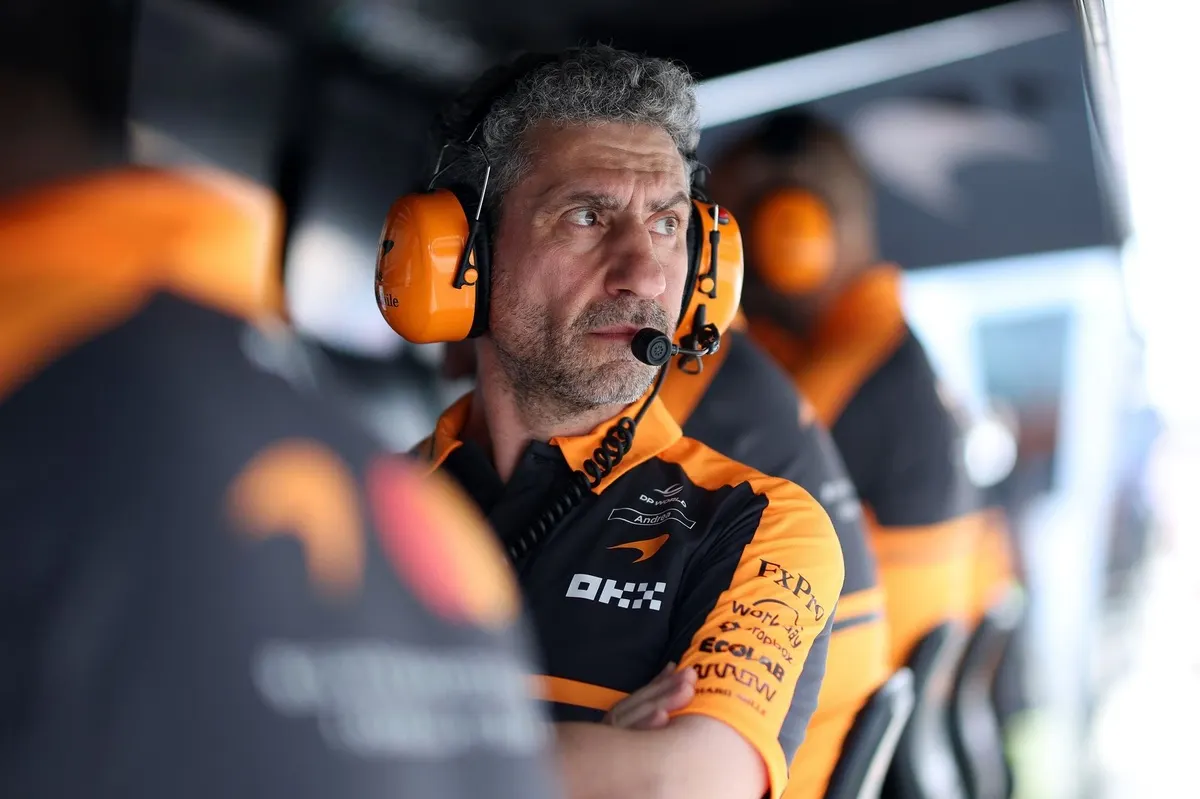
“我们没有倒退”——迈凯伦领队解释2026赛季
在连续两年获得车队总冠军后,迈凯伦经历了艰难的一年;领队安德烈亚·斯特拉解释了这一个被意外情况所定义的赛季
迈凯伦的2026年F1赛季以一场始终未能完全兑现的追赶努力为特征。
不过,领队安德烈亚·斯特拉坚持认为,其中的原因已经很清楚,因此他对2027年持乐观态度。他在接受Motorsport.com采访时表示:“与赛季初相比,我们如今处在完全不同的位置。”
每当迈凯伦似乎追上对手时,它发现自己又一次落后了。艰难的开局,随后是逐步的进步,并在赛季中段达到顶峰——当时MCL40似乎有能力树立技术标杆,接着竞争力逐渐下滑,直到巴西大奖赛才重返前列。这条轨迹并不容易解读。
斯特拉的解释超越了单个升级件的性能表现。他将车队2026年的困难追溯到上赛季发生的事情,并指出三个决定性因素:新车研发的延迟、2025年冠军争夺战对车队提出的要求所带来的后果,以及在新规则时代初期作为梅赛德斯客户车队的不利之处。
“我认为本赛季没有任何升级——至少在前排车队中——是不起作用的,”斯特拉解释道。“即使我们在巴库引入了一些新部件,之后看起来我们似乎退步了,但实际情况并非如此。竞争力必须相对于对手来评估,而不能仅仅看自己在绝对意义上的进步。从这个角度来看,我不认为我们在赛季中曾经倒退过。”
这一区分至关重要。迈凯伦在整个赛季中逐步提升,但不足以弥补对手所取得的进步。最重要的是,它必须从最初远超所有人想象的巨大差距中恢复过来。
“我们已确认,在赛季初,我们在研发方面落后了三个月,”斯特拉表示。
这是一个重要的承认,尤其因为这位意大利人明确表示,这不是事后通过将圈速差距换算成数月工作量得出的评估。迈凯伦在分析2025年的研发趋势时就已经发现了这个问题。
斯特拉承认了上赛季冠军争夺期间所发生之事的影响。迈凯伦原本计划逐步将资源转向2026年项目,但红牛在赛季后半程的复苏意味着车队必须继续高度关注仍在赛道上竞争的MCL39。
除此之外,还有一个尤为复杂的管理挑战:既要支持兰多·诺里斯和奥斯卡·皮亚斯特里的冠军雄心,又要维持内部平衡,不危及车队的未来。
斯特拉表示:“对我来说,这大概是我在F1的26个赛季中工作最努力的一个赛季。每一天,你都必须关注团队环境的管理,以及技术和运营方面的事务。”
这是迈凯伦故事中不太为人所见的方面之一。车队不仅要把精力投入到赛车研发和捍卫竞争力上,还要应对微妙的竞技局势。这项努力再加上技术困难,拖慢了2026年的准备工作。
梅赛德斯包揽双冠表明,如今引擎客户车队要想与供应商车队竞争变得更加困难
然而,斯特拉认为还有第二个决定性因素。多年来,迈凯伦一直证明客户车队可以使用与厂队相同的动力单元赢得世界冠军。2026年,这种情况发生了变化。
斯特拉表示:“2025年,我经常被问到不是厂商车队是否会成为问题。我一直说不会,事实上直到上赛季结束前,这从来都不是问题。”
随着新动力单元的引入,情况变得复杂得多。将引擎整合到赛车中并优化能量管理参数变得至关重要。负责开发具有竞争力且可靠动力单元的梅赛德斯高性能动力系统部门(HPP)必须确立其优先事项。
斯特拉承认:“当你是一支客户车队时,你就不是优先考虑的对象。在理解引擎功率曲线、某些冷却方面或优化整合时,我们来得稍晚了一些。”
一个具体的例子涉及变速箱齿比,这些齿比是根据功率曲线确定的,而这些曲线与随后在赛道上观察到的曲线并不完全匹配。这些看似微小的差异,但在新技术规则下,它们可能转化为显著劣势。
他补充道:“在竞争如此激烈的F1环境中,你不能仅仅因为无法处于研发时机的最前沿,就承受以结构性劣势白白让出零点一秒或零点二秒的代价。”
然而,最敏感的问题涉及用于优化动力单元运行的工具。梅赛德斯高性能动力总成部门(梅赛德斯 HPP)与厂队联合开发的部分软件包含无法与迈凯伦共享的专有元素。
斯特拉说:“他们告诉我们,这些工具包含大量梅赛德斯知识产权,因此不能交给我们。我并没有特别有力的论据去说‘你们无论如何都必须把它们给我们’。”
解决方案是与高性能动力总成部门共同开发等效工具,实质上重复了布拉克利与布里克斯沃思之间已经完成的部分工作。这一过程耗费了时间,迈凯伦要到2027年才能完全获得相同的优化能力。
尽管如此,斯特拉避免对其引擎供应商提出任何批评。他承认HPP面临的困难,包括与可靠性相关的困难,并排除了任何故意让迈凯伦处于不利地位的企图。双方的工作关系一直保持积极,但这并未消除结构性的劣势。
各项研发带来了性能提升,但不足以确保稳定的获胜状态
迈凯伦试图通过整个赛季引入的升级来弥补失去的差距。在迈阿密和匈牙利带来的研发产生了明显的改进,但不足以稳定地缩小差距。
“每次我们带来升级,我们都看到了进步,但我们也看到对手并没有原地踏步。其他车队也带来了自己的升级,我们未能缩小那个差距,”斯特拉承认道。
巴库是一个特别能说明问题的例子。在电能管理至关重要的赛道上,迈凯伦为它在优化动力单元方面的困难付出了代价:“在巴库,我们无法从最后一个弯道一直到最后一段直道末端释放全部电池能量。
“在那一刻,你在这条对动力如此敏感的赛道上承受着关键劣势。”
这些问题在赛季初的几站比赛中就已经显现。在墨尔本,车队发现一个次优参数如何可能影响整场比赛的能量管理,而在中国的可靠性问题导致两辆车都无法起步。
新规则的复杂性此前已被预料到,但没想到会达到这种程度。斯特拉承认,迈凯伦低估了动力单元会变得多么具有决定性,以及每一个未完美校准的参数会带来多高的代价。
不过,2026赛季并未削弱迈凯伦的雄心。斯特拉认为,车队现在对赛车有了更深入的理解,尤其是对梅赛德斯动力单元的理解。
“我对2027年感到乐观,”他说,“与赛季初相比,我们在动力单元的使用方式上已经处于完全不同的境地。”
与HPP的技术关系也将发生变化。2026年初无法使用的工具将在下个赛季完全开放,尽管比梅赛德斯官方车队晚了一年。
斯特拉认为还有另一个重要因素:2026赛季在赛事管理方面的要求低于上赛季,迈凯伦的领导层得以将更多精力投入到技术工作和新车准备上。目标是避免以本赛季拖累车队的同样劣势开启下赛季的冠军争夺。
他说:“我们是一支在三年内发展速度让我们连续两次夺得车队总冠军的车队。我们现在不能退缩,说第三或第四名就足够了。我们的目标是继续成为世界冠军。”
因此,迈凯伦以与赛季初不同的视角结束了2026年。斯特拉没有试图掩盖错误和延误,但他坚持认为全年所做工作的质量是可靠的。
现在的挑战是将车队所学到的转化为竞争优势,并将2026年视为一个过渡年,为未来重返F1前沿奠定基础。
英文原文
"We haven't taken any steps backwards" – McLaren boss explains 2026
It's been a difficult year for McLaren after two consecutive constructors' titles; team principal Andrea Stella explains a season defined by unforeseen circumstances
McLaren's 2026 Formula 1 season has been characterised by a recovery effort that never quite came to fruition.
Yet, team principal Andrea Stella insists the reasons for this are well understood, so he can be optimistic about 2027: "We are in a completely different place compared to the start of the season," he told Motorsport.com.
Whenever it seemed to have caught its rivals, McLaren found itself falling behind once again. A difficult start, followed by progress that culminated in a period of the championship when the MCL40 appeared capable of setting the technical benchmark, then a gradual decline in competitiveness and a return to the front at the Brazilian Grand Prix. This trajectory is not easy to interpret.
Stella has an explanation that goes beyond the performance of individual upgrades. He traces the team's 2026 difficulties back to what happened during the previous season, identifying three decisive factors: a delay in developing the new car, the consequences of the demands placed on the team by the 2025 championship battle, and the disadvantages of being a Mercedes customer team at the beginning of the new regulatory era.
"I don't think there have been any upgrades this season, at least among the top teams, that haven't worked," Stella explained. "Even when we introduced some new parts in Baku, after which it appeared that we had taken a step backwards, that wasn't actually the case. Competitiveness has to be assessed in relation to your rivals, not simply by looking at your own progress in absolute terms. And from that perspective, I don't believe we ever took any steps backwards during the season."
The distinction is fundamental. McLaren improved gradually throughout the season, but not enough to compensate for the progress made by its rivals. Above all, it had to recover from an initial deficit that was considerably greater than anyone might have imagined.
"We established that, at the start of the season, we were three months behind in terms of development," said Stella.
This is a significant admission, particularly because the Italian makes clear that this was not an assessment made retrospectively by translating the gap in lap times into months of work. McLaren had already identified the problem by analysing its development trends during 2025.
Stella acknowledges the impact of what happened during the previous championship battle. McLaren had planned to gradually redirect its resources towards the 2026 project, but Red Bull's resurgence in the second half of the championship meant it had to maintain a strong focus on the MCL39 which was still competing on track.
On top of this came an especially complex management challenge: supporting the championship ambitions of both Lando Norris and Oscar Piastri while maintaining an internal balance that would not jeopardise the team's future.
"For me, it was probably the season in which I worked harder than in any of my 26 seasons in F1," said Stella. "Every day, you had to pay attention to managing the team's environment, as well as the technical and operational aspects."
This is one of the less visible aspects of McLaren's story. The team had to devote its energy not only to developing the car and defending its competitiveness, but also to managing a delicate sporting situation. This effort, combined with the technical difficulties, contributed to slowing preparations for 2026.
Mercedes' double championship demonstrates that it's now more challenging for engine customers to be competitive with their suppliers
There is, however, a second element Stella considers decisive. For years, McLaren had demonstrated that a customer team could win a world championship using the same power unit as a works outfit. In 2026, that situation changed.
"In 2025, I was often asked whether not being a works team was a problem," said Stella. "I always said no, and in fact it had never been a problem until the end of last season."
With the introduction of the new power units, the situation became considerably more complicated. Integrating the engine into the car and optimising energy-management parameters took on decisive importance. Mercedes HPP, tasked with developing a competitive and reliable power unit, had to establish its priorities.
"When you're a customer team, you're not the priority," Stella acknowledged. "When it came to understanding the engine's power curves, certain cooling aspects or optimising the integration, we arrived a little late."
One concrete example involved the gearbox ratios, which had been defined using power curves that did not perfectly match those subsequently observed on track. These might appear to be marginal differences, but under the new technical regulations they can translate into significant disadvantages.
"In such a competitive F1 environment, you cannot afford to give away one or two tenths as a structural disadvantage simply because you're not in a position to be at the cutting edge of development timing," he added.
The most sensitive issue, however, concerns the tools used to optimise the power unit's operation. Some software developed jointly by Mercedes HPP and the works team contained proprietary elements that could not be shared with McLaren.
"They told us that these tools contained a significant amount of Mercedes intellectual property and that they couldn't give them to us," Stella said. "I didn't have particularly strong arguments with which to say, 'You have to give them to us anyway'."
The solution was to develop equivalent tools with HPP, essentially repeating some of the work that had already been carried out between Brackley and Brixworth. This process took time, and it is only in 2027 that McLaren will have full access to the same optimisation capabilities.
Nevertheless, Stella avoids any criticism of his engine provider. He acknowledged the difficulties faced by HPP, including those relating to reliability, and ruled out any deliberate attempt to disadvantage McLaren. The working relationship has remained positive, but that has not eliminated the structural disadvantage.
Developments have added performance, but not enough to ensure consistent winning form
McLaren attempted to make up the lost ground via the upgrades introduced throughout the season. The developments brought to Miami and Hungary produced clear improvements, but they were not enough to close the gap consistently.
"Every time we brought an upgrade, we saw a step forward, but we also saw that our rivals weren't standing still. The other teams brought their own upgrades too, and we weren't able to close that gap," Stella admitted.
Baku is a particularly telling example. At a circuit where electrical energy management is crucial, McLaren paid the price for its difficulties in optimising the power unit: "We weren't able to deploy all the battery energy from the final corner in Baku all the way to the end of the main straight.
"At that point, you're carrying a crucial disadvantage at a circuit that is so sensitive to power."
The problems had already emerged in the opening races. In Melbourne, the team discovered how a single suboptimal parameter could compromise energy management for an entire race, while reliability issues in China prevented both cars from starting.
The complexity of the new regulations had been anticipated, but not to this extent. Stella admits that McLaren underestimated just how decisive the power unit would become and how high the price would be for every parameter that wasn't perfectly calibrated.
The 2026 season hasn't diminished McLaren's ambitions, though. Stella believes the team now has a much deeper understanding of the car and, above all, of the Mercedes power unit.
"I'm optimistic about 2027," he said. "Compared with the start of the season, we're in a completely different place in terms of how we're using the power unit."
The technical relationship with HPP is also set to change. The tools that were unavailable at the start of 2026 will be fully accessible next season, albeit a year later than for the official Mercedes team.
There is another factor that Stella considers important: with 2026 being less demanding in terms of sporting management than the previous season, McLaren's leadership has been able to devote more energy to technical work and preparing the new car. The aim is to avoid starting next year's championship with the same deficit that has hampered the team this season.
"We are a team that, over three years, has had a rate of development that has taken us to two consecutive constructors' championships," he said. "We cannot now back down and say that finishing third or fourth is good enough. Our ambition is to remain world champions."
McLaren therefore ends 2026 with a different perspective from the one it had at the beginning of the season. Stella made no attempt to hide the mistakes and delays, but he stands by the quality of the work carried out throughout the year.
The challenge now is to turn what the team has learned into a competitive advantage, and to look back on 2026 as a transitional year that laid the foundations for a future back at the forefront of F1.
Motorsport.com ·
内容来自公开信源,聚合内容版权归原作者与来源所有。