诺里斯预期2030年F1赛事将超越拉斯维加斯大奖赛
F1拉斯维加斯大奖赛创造了352次超越和35次领先变化的成绩,刷新了锦标赛的记录。然而,亚军诺里斯对这一数据在驾驶舱内的意义并不完全认同。
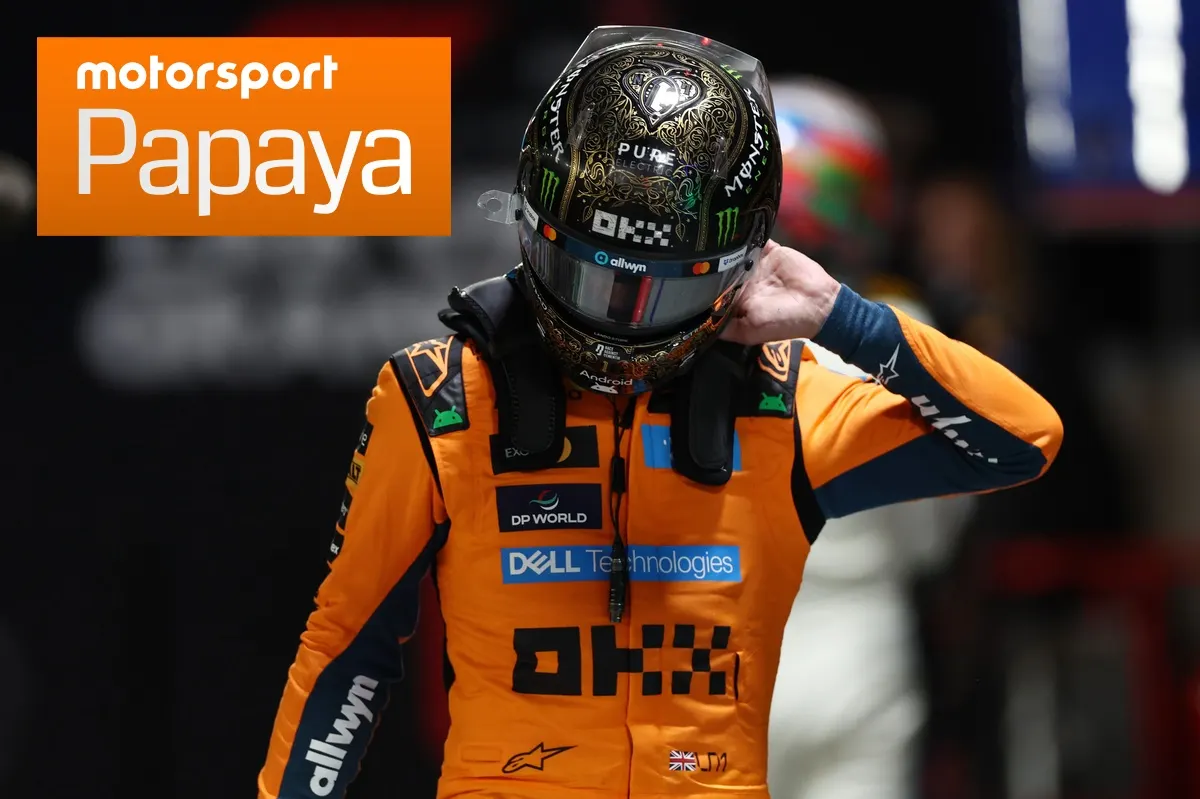
兰多·诺里斯预计2030年的F1赛车将超越拉斯维加斯大奖赛的壮观场面
兰多·诺里斯质疑拉斯维加斯的352次超车统计数据,表示在2026年的规则下,"有些超车并不是超车"
对于麦凯轮车迷来说,来自沃金克的新闻,有关车手、赛车、团队策略以及每个周末的赛事的最新消息。
一级方程式拉斯维加斯大奖赛呈现了一项为精彩集锦打造的头条统计数据:50圈比赛中共有352次超车和35次领先变化,打破了锦标赛的史上过弯记录。
然而,亚军兰多·诺里斯并不完全认同这个数字在驾驶舱内意味着什么。在完成比赛,落后于马克斯·维斯塔潘0.639秒后,诺里斯在FIA赛后新闻发布会上表示,他对这个原始计数提出了质疑——他认为电池驱动的速度差异使得周六晚上的许多超车感觉远非真正的赛车动作。
“马克斯解释得很好,”诺里斯说,这与维斯塔潘之前对斯特里普的摇摆式编队策略的否定相呼应,称其为“玩马里奥赛车”。从赛车角度来看,从外面看,我确信这可能是Formula 1历史上最好的比赛之一。你永远不知道会发生什么。有些超车是从无到有的。”
然而,在方向盘后面,感觉远不如有机。诺里斯解释说:“问题是,有时候你接近他人的速度有20、30公里每小时,尤其是对我们来说,有些超车并不是超车——你按下增压,就超过了别人。”
整个周末,迈凯轮车队都深刻感受到了直线上的脆弱性。就在诺里斯在排位赛中称MCL40在直道上“糟糕透顶”——在赛道3上几乎失去了八分之一的速度给基米·安东内利,同时他的地板下还夹着一个塑料袋——英国人在比赛初期就滑出了前十,同时他在思考如何分配他的电能。
保持干净仍然得到了丰厚的回报:乔治·拉塞尔在第48圈和安东内利在第49圈的晚些时候犯错,让迈凯轮车队与奥斯卡·皮亚斯蒂里一起获得了二、三名的成绩,这是自5月份迈阿密大奖赛以来的首次双料领奖台。
诺里斯相信2030年可以保持比赛的精彩,而不需要花哨的噱头。
尽管对2026年辅助动力飞驰的纯洁性表示质疑,诺里斯并没有完全否定拉斯维加斯的比赛。他认为,凉爽的沙漠沥青路面可以防止在污浊的空气中轮胎过热,他争辩说,拉斯维加斯的街道赛道仍然会带来无休止的轮对轮战斗,而不需要强迫车手不断管理电池储备。
“但比赛仍然很精彩,”诺里斯说。“你仍然在为位置而战,有很多好事发生,但我确信,如果你没有现在这样的电池,你仍然会有同样多的超车。”
“作为车手,我们会更加享受它,因为我们能够全力加速,不必考虑再生和电池,不必部署和部署所有这些事情,”他补充道。“所以,是的,我想说的是我们本可以做得更好。想象一下2030年——哦,我的天,那将是你们见过的最好的比赛。”
诺里斯在周五内华达州的突破之后对2030年的预测具有实际意义,因为在那里,国际汽联宣布了一致原则上同意一项更轻的2030年规则集,该规则集以更简单的2.1升涡轮增压V8发动机、可持续燃料和减少混合动力复杂性为中心——待下个月在上海举行的世界汽车运动理事会投票后确定。
目前,在赢得圣保罗站之后,连续两次登上领奖台使诺里斯的积分与拉塞尔持平,达到264分——比第三名的刘易斯·汉密尔顿少3分——同时将红牛车队在 constructors’ championship 中对麦克拉伦的优势从17分缩小到9分(440分对431分),进入卡塔尔和阿布扎比。
英文原文
Lando Norris expects 2030 F1 racing to surpass Las Vegas GP spectacle
Lando Norris questions Vegas's 352-overtake stat, saying "some of the overtakes weren't overtakes" under 2026 rules
For McLaren fans. Papaya news from Woking, with the latest on the drivers, the car, team strategy and every race weekend.
Formula 1’s Las Vegas Grand Prix delivered a headline statistic built for highlight reels: 352 overtakes and 35 lead changes across 50 laps, shattering the championship’s all-time passing record.
Yet runner-up Lando Norris was not fully sold on what that figure meant from inside the cockpit. Speaking in the FIA post-race press conference after finishing 0.639 seconds behind Max Verstappen, the McLaren driver pushed back on the raw count - arguing that battery-driven speed deltas made plenty of Saturday night’s passes feel far from genuine racing moves.
"Max explained it well," Norris said, echoing Verstappen’s earlier dismissal of the Strip’s yo-yo drafting as "playing Mario Kart". "From a racing point of view, from the outside, I'm sure it probably was the best race ever in Formula 1. You never know what's going to happen. There were overtakes out of nowhere."
Behind the steering wheel, however, the sensation felt far less organic. "The thing is, sometimes you have a closing speed of 20, 30 kph to people, especially to us, and some of the overtakes weren't overtakes - you press boost, and you go past someone," Norris explained.
McLaren felt that straight-line vulnerability acutely all weekend. Just a day after Norris labelled the MCL40 "horrendous in the straights" - having bled nearly eight-tenths to Kimi Antonelli through Sector 3 in qualifying while carrying a stray plastic bag under his floor - the Briton slid outside the top 10 early on while figuring out where to spend his electrical power.
Staying clean still paid off handsomely: late errors from George Russell on Lap 48 and Antonelli on Lap 49 handed McLaren a two–three finish alongside Oscar Piastri, its first double podium since May’s Miami Grand Prix.
Norris believes 2030 can keep the show without the gimmicks
Even while questioning the purity of 2026’s boost-assisted flybys, Norris stopped short of writing off Las Vegas’s action altogether. With cool desert asphalt keeping tyre overheating in dirty air at bay, he argued the Strip would still generate relentless wheel-to-wheel battles without forcing drivers to constantly manage electrical reserves.
"But the racing was still good," Norris said. "You're still fighting for position and just a lot of good things in there, but I'm sure if you didn't have the battery how it was, you would still have just as many overtakes.
"We would enjoy it even more as drivers because we'd be able to push and go flat out and not have to think about re-gen and battery and not deploying and deploying and all of this stuff," he added. "So yeah, we could have been even better is what I'm trying to say. So imagine in 2030 - oh my God, that's going to be the best race you've ever seen."
Norris’s 2030 forecast carries real weight following Friday’s breakthrough in Nevada, where the FIA announced unanimous agreement in principle on a lighter 2030 ruleset centred on simpler 2.1-litre turbocharged V8s, sustainable fuels, and reduced hybrid complexity - pending next month’s World Motor Sport Council vote in Shanghai.
For now, back-to-back podiums after his Sao Paulo win pull Norris level with Russell on 264 points - three shy of Lewis Hamilton in third - while trimming Red Bull’s constructors’ advantage over McLaren from 17 points to nine (440 to 431) entering Qatar and Abu Dhabi.
Motorsport.com ·
内容来自公开信源,聚合内容版权归原作者与来源所有。