哈贾尔在拉斯维加斯无线电中表达不满
哈贾尔从第四位发车,第四圈已升至第二,紧随红牛队友维斯塔潘。比赛中他主张采用类似自行车赛的尾流战术,红牛对其进步表示认可。
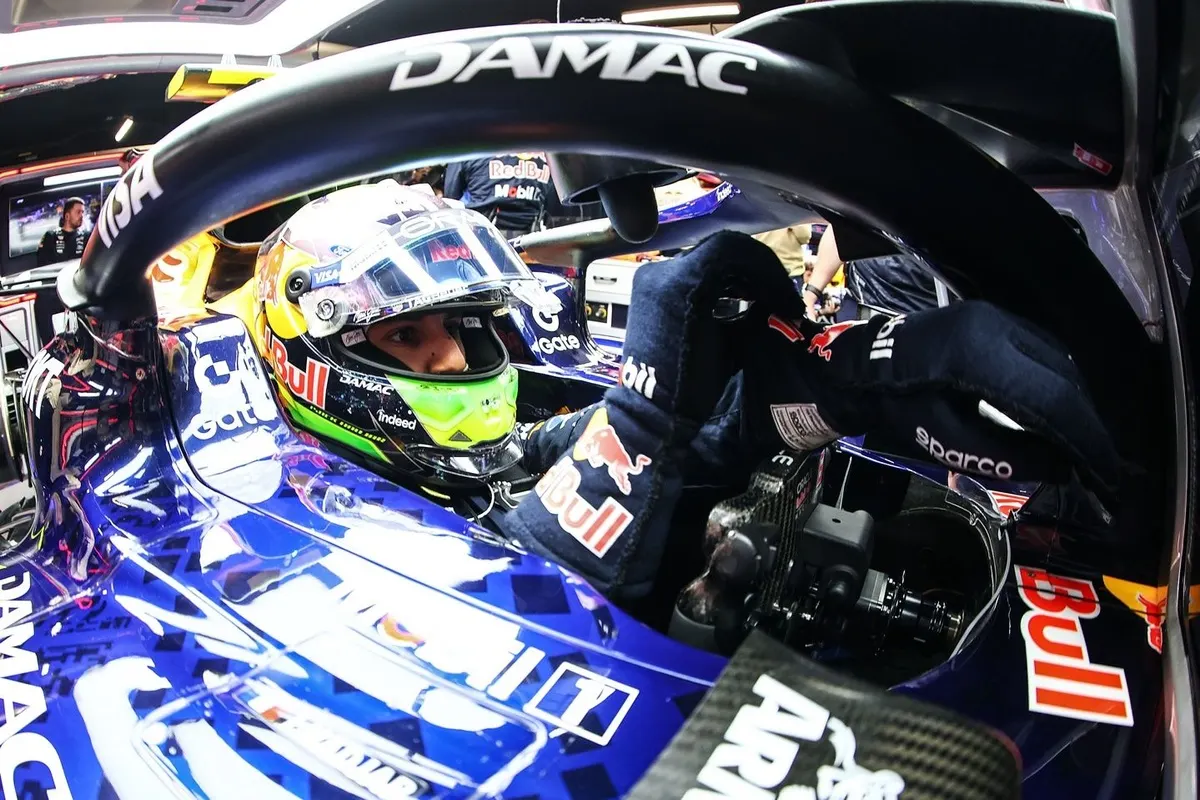
哈贾尔在拉斯维加斯无线电中表达不满——红牛无线电里究竟发生了什么
哈贾尔在拉斯维加斯比赛中主张采用类似自行车赛的战术,红牛对其进步表示认可
哈贾尔从第四位发车参加F1拉斯维加斯大奖赛,到第四圈时他已升至第二位,紧随红牛队友维斯塔潘。
鉴于这场比赛已演变成只能被形容为类似场地自行车赛那样的尾流争夺战,哈贾尔迟早会尝试争夺领先位置,这几乎是不可避免的。
但他的比赛工程师理查德·伍德很快就发出了提醒。伍德解释说,首要任务是避免车队整体损失时间。红牛需要拉开与乔治·拉塞尔的差距,而不是把宝贵的时间浪费在内斗上。而哈贾尔——当然并不缺乏自信,但归根结底是红牛忠诚的团队成员——照办了。
最终,他在通往14号弯的长直道上再次与维斯塔潘并排。但这位荷兰人无意不战而降让出领先位置。“他能不能别再防守了?不然我只会损失时间,”哈贾尔在无线电中抱怨道。然而伍德坚持他们此前已经商定的计划:“车队要求是防守乔治,否则我们会来回拉锯。”
当时,拉塞尔是前方红牛快车最接近的追赶者,三人愉快地交换着位置。有一次,拉塞尔甚至同时超越了两位红牛车手,结果两三个弯后又发现自己回到了第三位。在拉斯维加斯,尾流和能量管理是强大的武器。事实上,比纯粹的速度更强大。
哈贾尔的无线电信息清楚地表明,从车队角度来看,他更希望看到类似自行车运动中轮转领骑的配合,而非传统的编队行驶:一组车手通过不断轮换领骑来协同工作,让每个成员都能从尾流中受益,使整个团队比单个车手独自骑行更快。
但红牛显然对这场比赛的特殊态势有些措手不及,似乎对哈贾尔的提议并不特别感兴趣。为了拉开与拉塞尔的差距而共享领先位置的想法,甚至没有与维斯塔潘讨论过。至少,在这位荷兰车手的官方车载无线电频道中,听不到相应的询问。
马克斯·维斯塔潘,红牛车队,伊萨克·哈贾尔,红牛车队
最终,哈贾尔受够了。“不,你看,我现在就给你举个例子。看看接下来会发生什么,”他在无线电中说。而恰恰就在那一刻,他没有刻意提前松油门以避免在14号弯攻击维斯塔潘,而是继续踩住油门。结果相当壮观。哈贾尔以数米的优势超过队友,取得领先。随后,他始终以团队为重,又放慢速度,让维斯塔潘在入弯前重新夺回第一的位置。
但他已经表明了自己的观点。“我做不到。在直道上,差距太大了。这比你想象的更难。我没有撒谎。”
哈贾尔认为,如果允许他超越维斯塔潘,两辆红牛赛车整体上会更快,结果维斯塔潘在下一圈就夺回了位置。与其不必要地互相拖慢,他们本可以利用巨大的尾流优势来维持集体的速度。这是一个简单直接的提议:轮流领跑,从彼此的尾流中获益,并尽可能快地向前推进。
这一切都发生在第八圈。几乎就像是比赛本身决心要证明哈贾尔的论点正确一样,仅仅一圈之后,红牛的一二名阵型就消失了。车队未能甩开拉塞尔。
赛后有人问,红牛坚持不惜一切代价保护维斯塔潘的领先地位,是否实际上损害了自己的机会,车队领队洛朗·梅基斯承认哈贾尔提出了一个合理的观点。
“说得有道理,”梅基斯承认。“我想首先要说的是,尽管我们都知道这是一条能量匮乏的赛道,我们都预计比赛中会有很多博弈,尽管我们昨天看到了比预期大得多的尾流效应,我想我们没有人会在比赛前想到,我们会在50圈里每圈有两次超车。”换句话说,就连红牛也低估了尾流效应会变得多么极端。
马克斯·维斯塔潘,红牛车队,伊萨克·哈贾尔,红牛车队
"那么我为什么这么说呢?因为我确实认为,在最初几圈里,我们都必须适应这场比赛的新现实。"这解释了为什么红牛的战略师们不愿采纳哈贾尔的做法。"而且我们并不觉得每圈交换赛车位置会是坚持到终点最快的方式。我们永远不会知道答案。我们觉得,如果两辆车都能互相帮助防守身后的位置,那肯定更好。"
经过几个小时的回顾之后,梅基斯对那个判断已不像比赛中那样确定了。毕竟,没有人能肯定地说,哈贾尔的轮换领先策略是否本可以让两辆红牛摆脱拉塞尔。
最终,这个问题自行解决了——哈贾尔的前翼突然断裂,实际上终结了这位22岁车手的胜利希望。难怪赛后当被问及车队无线电讨论的话题时,他的回应有些恼火:"没有误解。我不是想制造混乱。只是动动脑子而已。"
无论有意与否,这确实可以被解读为对红牛维修区墙的一次言语暗讽。哈贾尔解释了他采取这种策略背后的思路:“我试图做的,因为我懂赛车,就是你需要尽可能快地跑。这无所谓。你只需要往前冲,超车,被反超回来,再超车。你就得一直这样跑。因为如果我压着速度,那么后面的人、后面的车就会直接超过我,因为速度差有40公里/小时。”
这位法国车手确信红牛只是低估了尾流的非凡影响力:“我觉得他们只是没意识到尾流博弈有多重要。不是说我只要跟在后面就行,如果那样做,乔治就会过去。要么我拼一把,我们俩都全速跑,超来超去。那才是最快的比赛。如果你让我跟在后面、直接放弃位置,那对我来说行不通。”
然而,尽管有这些沮丧情绪,哈贾尔在拉斯维加斯实际上可能大大提升了自己在红牛内部的地位。首先,他再次证明了自己是长期以来第一位至少能在比赛的某些阶段接近维斯塔潘表现水平的队友。其次,任何关于他可能只是在自私行事、利用巧妙的无线电信息为自己越过维斯塔潘创造条件的残留怀疑,现在都应该被消除了。
马克斯·维斯塔潘,红牛车队,伊萨克·哈贾尔,红牛车队
哈贾尔的处理方式表明,他考虑的是车队的整体表现,而不仅仅是自己的位置。这种行为能够建立信任,而梅基斯恰恰对此赞不绝口:“说实话,我认为他做得非常、非常好。
“他凭实力出现在那里,他之所以在那里是因为他有速度,他之所以在那里是因为他非常清楚地理解防守和进攻的动作,这对我们来说是最好的情况。而且当我们要求他把缠斗留到后面、集中精力不被身后的人追上也时,他也理解得很好。”
对梅基斯来说,这次事件进一步证明了哈贾尔在整个赛季中的成长:“今年我们已经说过很多次了,他一场比一场进步。这也是我们今天又一次看到的。他在发车格上排第四,在赛道上跑到过第一、第二。上周末,我们拿到了第二、第三,而且上周末我们不得不交换了赛车。所以这是好消息。”
除了绝对速度之外,这位红牛车队领队还强调了哈贾尔取得重大进步的另一领域:情绪控制。“伊萨克是一个非常聪明的人,对我们这些非车手来说,很难评估车手在车内必须应对的情绪管理问题,”他说。
“他认识到了这一点,他非常清楚,更好地管理这些情绪能让他在车内赢得圈速,也能在车外通过与工程师的沟通质量赢得圈速。正如你指出的,他在过去两三场比赛中取得了非常非常大的进步。我们预计未来还有更大的潜力。”
“因此,他与工程团队的交流越来越好,当他能够控制住情绪时,他的执行也更强。我们对他取得的进步非常满意。”
英文原文
Isack Hadjar frustrated – What really happened on Red Bull's team radio in Las Vegas
Hadjar advocated for cycling-like tactics in the Las Vegas race, and Red Bull is impressed with his progress
Isack Hadjar started Formula 1’s Las Vegas Grand Prix from fourth on the grid, and by lap four he had already found himself running second, right behind Red Bull team-mate Max Verstappen.
And given that the grand prix had turned into what can only be described as a slipstreaming battle of the kind normally associated with track cycling, it was almost inevitable that Hadjar would sooner or later have a go at taking the lead.
But a reminder from his race engineer Richard Wood was not long in coming. The priority, Wood explained, was to avoid losing time as a team. Red Bull needed to build a gap to George Russell, rather than waste precious seconds fighting among themselves. And Hadjar, certainly no stranger to self-confidence but ultimately a loyal Red Bull team player, complied.
Eventually, he found himself alongside Verstappen again on the long straight towards Turn 14. But the Dutchman had no intention of surrendering the lead without a fight. "Can he stop defending? Otherwise I just gotta lose time," Hadjar complained over the radio. Wood, however, stuck to the plan they had already agreed upon: "Team request is to defend against George, otherwise we will be yo-yoing."
At that point, Russell was the closest pursuer of the Red Bull Express at the front, with the trio merrily swapping positions. On one occasion, Russell even managed to overtake both Red Bulls simultaneously, only to find himself back in third place two or three corners later. In Las Vegas, slipstreaming and energy management were powerful weapons. More powerful, in fact, than outright speed.
Hadjar's radio messages made it clear that, from a team perspective, he would have preferred something resembling a rotating paceline in cycling over conventional formation driving: a group of riders works together by constantly rotating the lead, allowing each member to benefit from the slipstream and enabling the group as a whole to travel faster than an individual rider could manage alone.
But Red Bull, apparently caught somewhat off guard by the peculiar dynamics of the race, did not seem particularly interested in Hadjar's proposal. The idea of sharing the lead in order to open up a gap to Russell was not even discussed with Verstappen. At least, there is no corresponding question to be heard on the Dutchman's official onboard radio feed.
Max Verstappen, Red Bull Racing, Isack Hadjar, Red Bull Racing
Eventually, Hadjar had had enough. "No, look, I'm gonna give you an example right now. Look at what's gonna happen," he radioed. And at precisely that moment, rather than deliberately lifting off the throttle early to avoid attacking Verstappen into Turn 14, he kept his foot down. The result was quite spectacular. Hadjar sailed past his team-mate by several metres and into the lead. Then, ever the team player, he backed off again and allowed Verstappen to reclaim first place before the corner.
But he had made his point. "I can't. On the straight, there's too big of a difference. It's harder than you think. I'm not lying."
Hadjar argued that the two Red Bulls would be faster overall if he were allowed to overtake Verstappen, only for Verstappen to retake the position on the following lap. Rather than unnecessarily slowing one another down, they could use the enormous slipstream advantage to maintain their collective pace. It was a straightforward proposition: take turns leading, benefit from each other's slipstream, and keep moving forward as quickly as possible.
All of this happened on lap eight. And almost as if the race itself were determined to vindicate Hadjar's argument, Red Bull's 1-2 formation was gone just one lap later. The team had failed to shake off Russell.
Asked afterwards whether Red Bull might actually have compromised its own chances by insisting on protecting Verstappen's lead at all costs, team principal Laurent Mekies acknowledged that Hadjar had made a legitimate point.
"Fair points," Mekies admitted. "I think the first thing to say is that as much as we all knew it was an energy-poor track and we were all expecting a lot of gaming in the race, as much as we saw yesterday the much bigger than expected slipstream effect, I think none of us were going to the race thinking that we'll have two overtaking per lap for 50 laps." In other words, even Red Bull had underestimated just how extreme the slipstreaming effect would prove to be.
Max Verstappen, Red Bull Racing, Isack Hadjar, Red Bull Racing
"So why am I saying that? Because I truly think that in the first few laps we all had to adapt on what is the new reality for this race." That explains why Red Bull's strategists were reluctant to embrace Hadjar's approach. "And we didn't feel that swapping the car every lap would be the fastest way to go to the end. We will never know the answer. And we felt it was certainly better if both cars could help each other defend on the positions behind."
With the benefit of a few hours' hindsight, Mekies was no longer quite as certain about that judgement as he had been during the race. After all, nobody could say for sure whether Hadjar's rotating-lead strategy might have enabled the two Red Bulls to escape from Russell.
Eventually, the issue resolved itself when Hadjar's front wing suddenly broke, effectively ending the 22-year-old's victory hopes. Little wonder, then, that his response was somewhat irritated when the subject of the team radio discussion was raised after the race: "There was no misunderstanding. I wasn't trying to create a mess. It's just using my brain."
Whether intentionally or otherwise, that could certainly be interpreted as a verbal dig at the Red Bull pitwall. Hadjar explained the thinking behind his approach: "What I'm trying to do, because I understand racing, is you need to go as fast as possible. It doesn't matter. You need to just go, overtake, get overtaken back, overtake. You just need to keep going. Because if I hold back, then the guy behind and the car behind is just going to overtake me because there's 40km/h difference."
The Frenchman was convinced that Red Bull had simply underestimated the extraordinary influence of the slipstream: "I think they just didn't realise how big the tow games were. It's not like I can just sit behind and if I do that then George goes through. It's either I go for it and we both go flat out, passing, re-passing. That was the fastest race. If you tell me to sit behind and just give up the position then it's not going to work for me."
For all his frustration, however, Hadjar may actually have done his standing within Red Bull a great deal of good in Las Vegas. First, he once again demonstrated that he is the first team-mate in a long time capable of operating, at least for certain stretches of a race, in something approaching Verstappen's performance territory. And second, any lingering suspicions that he might simply be acting selfishly, using clever radio messages to manoeuvre himself past Verstappen, should now have been put to rest.
Max Verstappen, Red Bull Racing, Isack Hadjar, Red Bull Racing
Hadjar’s approach demonstrated that he was thinking about the team's overall performance rather than merely his own position. This sort of behaviour builds trust, And Mekies was full of praise for precisely that: "I think he did very, very good, honestly.
"He was there on merit, he was there because he had the pace, he was there because he was understanding very well the defensive, offensive manoeuvres, and that's the best situation possible for us. And he also understood well when we asked him to keep the battles for later and to concentrate on not getting caught by the guys behind."
For Mekies, the incident was further evidence of Hadjar's development over the course of the season: "We have been saying so many times this year, he's improving race after race. That's also what we see another time today. He was P4 on the grid, P1, P2 on the road. Last weekend, we did P2, P3, and we had to swap the cars last weekend. So it's good news."
Beyond his outright pace, the Red Bull team principal highlighted another area in which Hadjar has been making substantial progress: emotional control. "Isack is a very intelligent individual, and it's very difficult for us non-drivers to assess what drivers have to deal with in terms of management of their emotions when they are in the car," he said.
"And he recognised that, he knows very well that managing these emotions better gives him lap time in the car and lap time outside of the car in terms of the quality of the communication with his engineers. And as you pointed out, he made very, very big steps in the last two, three races. And we see even more potential moving forward."
"So he's exchanging better and better with his engineering crew, and he's executing stronger when he's able to keep his emotions under control. And we are very happy with the progress he's making."
Motorsport.com ·
内容来自公开信源,聚合内容版权归原作者与来源所有。