F1最年轻世界冠军诞生
安东内利在墨西哥大奖赛中获得第三名,成为梅赛德斯车手,同时也是F1历史上最年轻的世界冠军。他20岁就实现了童年梦想,打破了2010年维特尔23岁时创下的纪录。
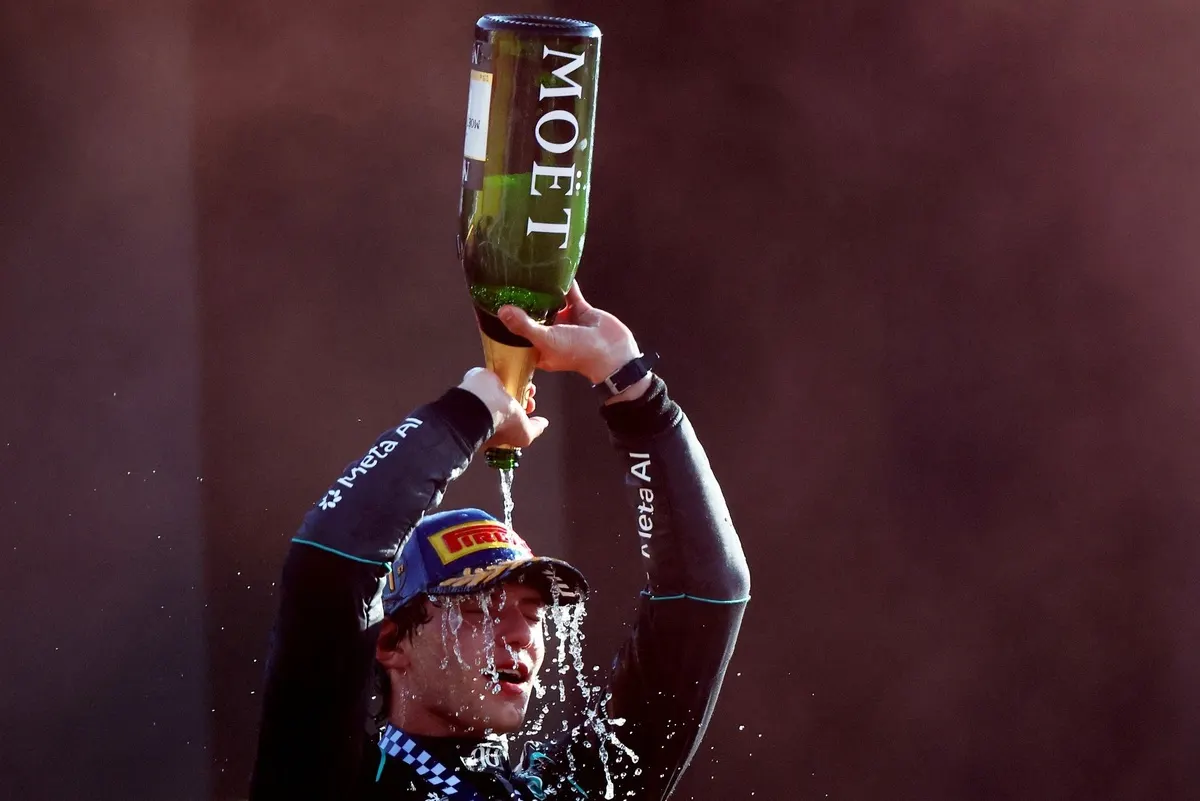
基米·安东内利成为了F1历史上最年轻的世界冠军,年仅20岁
基米·安东内利在墨西哥大奖赛中以第三名的成绩冲过终点线,这使得梅赛德斯车手成为了F1历史上最年轻的世界冠军。
这位意大利人在20岁时实现了他的童年梦想,这意味着他从2010年成为世界冠军时的塞巴斯蒂安·维特尔手中夺得了记录,当时维特尔只有23岁。
这是在安东内利统治了一个赛季之后发生的,他在2026年还剩下四轮比赛时就锁定了冠军,这得益于他的九次胜利、总共16次领奖台和七次 起跑线位置。
所以,他将这位年轻人置于伟大者之中,但还有谁能在如此年轻的时候取得如此成功呢?
现在有五位车手在25岁之前成为了F1世界冠军,正如我们将看到的,这个名单相当偏向现代时期。
关于马克斯·维斯塔潘,他在F1的第七个赛季就成为了世界冠军,这相当说明问题——尽管他仍然不到25岁。这位荷兰人从小就注定要成为赛车运动的伟大人物,从小就在前F1车手父亲约斯那里接受严格的训练,在卡丁车比赛中几乎赢得了所有冠军。
维斯塔潘在2014年参加了青训车队的一季单座赛车比赛,即欧洲F3,然后在第二年首次亮相F1,加盟托罗罗索车队。这使得他成为了F1历史上最年轻的车手,年仅17岁,他在那个赛季的出色表现使他得以晋升到红牛车队,从那时起他就一直留在了那里。
胜利并不特别频繁地出现——他在2016年至2020年期间赢得了8次——在刘易斯·汉密尔顿和梅赛德斯的主导下,但随后红牛为2021年打造了一艘火箭船——得益于大幅升级的本田引擎。
这导致了所有人希望看到的战斗:汉密尔顿对阵维斯塔潘。大师对阵学徒。一位车手在争夺创纪录的第八冠,而另一位车手在为他的第一个冠军而战。他们之间赢得了除了巴库的塞尔吉奥·佩雷斯之外的所有10场大奖赛,而那个时期的最后一场,银石赛道,汉密尔顿和维斯塔潘在Copse发生碰撞,紧张局势升级。
红牛车手遭遇了50G的撞击,结束了他的连续三场胜利,而汉密尔顿克服了10秒的罚时,赢得了比赛,并将差距缩小到只有8分。接下来的几轮比赛中,排名起伏不定,紧张局势依然很高,在蒙扎又发生了一次碰撞,看起来维斯塔潘在墨西哥的胜利几乎确保了他第18轮的冠军。
这给了他19分的领先优势,剩下四场比赛,但随后汉密尔顿赢得了接下来的三场比赛,包括巴西和沙特阿拉伯,在那里他们再次陷入僵局,以平分秋色进入阿布扎比的决赛。
但是,关于接下来发生的事情有详细的记录,维斯塔潘利用安全车混乱的时机在最后一圈超越汉密尔顿,成为世界冠军。随后,大门敞开,维斯塔潘连续赢得接下来的三个冠军,在27岁时成为四届世界冠军。
费尔南多·阿隆索在年轻时就已经经历了这一切,他在2001年首次参加F1比赛,代表米纳迪车队,2002年成为雷诺车队的测试车手,然后在2003年转为全职车手,并在那一年赢得了他的首个胜利。
这位西班牙人在2004年继续保持领先地位,为2005年夺冠奠定了基础,那一年雷诺车队得益于规则的改变。车队不能再在比赛中更换轮胎,也不能在两周内使用引擎,因此可靠性而非速度成为关键。
在阿隆索对抗麦克拉伦车队的基米·莱科宁的比赛中,雷诺车队拥有充足的可靠性。雷诺车手在开赛的前三场大奖赛中就取得了26分——两个胜利和一个领奖台——而芬兰人只有7分。
莱科宁回来了,在接下来的四轮比赛中赢得了其中三场,随着赛季的进行,麦克拉伦的竞争力也在不断增强。但是,这家英国品牌在将绝对速度转化为锦标赛成功方面遇到了困难,因为技术问题在一年中的多次场合阻碍了莱科宁的发挥。
因此,阿隆索只能坚持自己的做法,在最后的六场大奖赛中始终为领奖台而战,并在第19轮的第17场比赛中最终赢得了冠军。当时,他成为了F1历史上最年轻的世界冠军,当时超越了自1972年以来保持的埃默森·菲蒂帕利的记录(25岁273天),并在2006年连续两年夺冠。
然而,对于这位西班牙人来说,尽管在2010年和2012年等多次险些夺冠,但第三个F1冠军仍然尚未到来。但即使45岁高龄,他仍然令人印象深刻,保持着最多大奖赛参赛次数的记录。
安东内利现在是三位在第二年就成为世界冠军的车手之一,继雅克·维伦纽夫(1997年)和刘易斯·汉密尔顿(2008年)之后。当然,汉密尔顿在他的新秀赛季本可以轻松实现这一成就,因为他以锦标赛领头的身份进入巴西决赛,但最终被莱科宁超越。
但是这位英国人在2008年无疑弥补了之前的不足,作为赛季前的热门人选,他凭借杆位发车赢得了墨尔本站的比赛,实现了自己的目标。然而,接下来的几站比赛证明,汉密尔顿的夺冠之路并不会那么顺利,因为法拉利车队凭借赢得接下来的四场大奖赛,使得莱科宁和费尔南多·阿隆索在车手积分榜上以1-2的领先优势成为真正的挑战者。
因此,很快这场冠军争夺战就变成了两支车队的对决,就像2007年一样,而2008年上半年的中段,汉密尔顿展现出了他最好的状态,在摩纳哥、银石和德国站都取得了胜利。尤其是他在雨中领先超过一分钟赢得的家乡赛事,更是堪称经典——这得益于他从第四位发车直接跃升至第一位。
银石站标志着赛季的一半,下半赛季则出现了汉密尔顿与马萨之间的双雄对决。尽管当时27岁的巴西人在最后的九轮比赛中赢得了三场比赛,而他的对手只赢了一场,但他受到了不稳定性的困扰。
在匈牙利站出现了引擎问题,然后在新加坡站出现了糟糕的维修区停站,在那里他著名地带着连接燃料软管的赛车离开了维修区。这些非积分站最终让他输给了稳定的汉密尔顿,后者在巴西圣保罗的英特拉戈斯赛道最后一场比赛的最后一个弯道超越了蒂莫·格洛克,戏剧性地赢得了他的首个世界冠军头衔。当时,他成为了F1历史上最年轻的世界冠军。
2010年的F1赛季是现代历史上最不可预测的赛季之一,有三支车队在四名车手中争夺冠军,最终在最后一天仍有车手有机会夺冠。其中最不可能获胜的可能是最终获胜的那位。
维特尔那年一直处于幕后,直到最后一场比赛才首次领跑积分榜。这位红牛车手在开赛的前两轮中排名第四,并在马来西亚赢得了胜利。他不得不等待另外五场比赛才再次获胜,而法拉利的阿隆索、队友马克·韦伯,以及麦克拉伦车手汉密尔顿和简森·巴顿在锦标赛中领先。
这是一个非常混乱的赛季,冠军可能属于任何人,这主要归功于维特尔在赛季末的强势反弹,使他赢得了他的首个冠军头衔。这位德国人在最后四轮中赢得了三场,其中一场是在阿布扎比的决赛中,当时他落后领跑者阿隆索15分。
但法拉利似乎更担心韦伯而不是维特尔,因为澳大利亚人在早些时候的维修区停车后,阿隆索大部分时间都卡在雷诺车手维塔利·彼得夫的后面。
西班牙人那天排名第七,韦伯第八,而维特尔轻松夺冠,从对手手中夺走了冠军头衔。这标志着红牛明星开始了一个统治时代的到来,他在2013年成为了四届世界冠军,在此之前他在地面效应时代经历了多次险些夺冠的机会。
2026赛季注定是安东内利首次争夺世界冠军的机会,因为梅赛德斯凭借其强大的引擎,在规则变更前成为了重头戏的赛季热门。
但乔治·拉塞尔是许多人关注的焦点,因为他与安东内利起伏不定的菜鸟赛季相比,在2025年表现非常出色。这位英国人比这位青少年领先169分,后者经常犯不必要的错误。考虑到他的表现以及他的丰富经验,拉塞尔今年领导梅赛德斯车队争夺冠军似乎是理所当然的。
尤其是当他从 pole position 赢得墨尔本揭幕战时,但从上海的第二轮开始,安东内利就成为了主导的驾驶员,超出了所有人的预期。他夺冠赛季的基石无疑是他在中国到摩纳哥期间连续五次获胜,而拉塞尔则遭遇了糟糕的运气,比如在加拿大领先时引擎故障。
然而,安东内利在第七轮到第九轮之间遭遇了两次未能得分的情况——奥地利和银石赛道,而拉塞尔则获得了三个领奖台,包括一场胜利。这缩小了差距至25分,但以冠军般的姿态,安东内利通过在斯帕赛道从杆位出发获胜,阻止了可能属于拉塞尔的所有势头,而他的队友在与汉密尔顿的第一圈碰撞中遭受了损失。
从那时起,很明显,安东内利将成为20岁的世界冠军。即使法拉利、麦克拉伦和红牛车队通过升级缩小了与梅赛德斯之间的差距,意味着银箭的胜利不再那么常见,安东内利仍然保持冷静,完成了必要的任务,以保持在积分榜的领先位置。
他在赞德福特和雪邦取得了第二名,通过从第16位上升到第五位,在巴库最大限度地减少了损失,同时也没有忘记他在蒙扎赛道从第19位发车取得惊人的主场胜利。到目前为止,安东内利犯的错误非常少,除了三轮之外,所有比赛都站在领奖台上,最终在赫尔曼诺斯·罗德里格斯赛道达到了他的巅峰时刻。
英文原文
Kimi Antonelli has become F1's youngest ever world champion, aged just 20
Kimi Antonelli crossing the line in third place at the Mexico Grand Prix has resulted in the Mercedes driver becoming Formula 1’s youngest ever world champion.
The Italian has achieved his childhood dream at just 20 years old, which means he takes the record from Sebastian Vettel who was still only 23 when he became world champion in 2010.
It comes after a dominant season for Antonelli who has clinched the crown with four rounds remaining in 2026, thanks to nine wins, 16 podiums in total and seven pole positions.
So it’s put the youngster among the greats, but who else managed to achieve such success at an early age?
There are now five drivers to have become an F1 world champion before the age of 25 and, as will be seen, the list is rather biased towards the modern age.
It says a rather lot about Max Verstappen that he became world champion in his seventh season of F1 - yet he was still younger than 25. The Dutchman was simply destined for motor racing greatness from a young age, receiving tough lessons from his ex-F1 driver dad Jos, before winning almost everything in karting.
Verstappen contested just one season of junior single-seaters, European F3 in 2014, before making his F1 debut with Toro Rosso the following year. That made him F1’s youngest ever driver, aged just 17, and an impressive rookie season earned him a promotion to Red Bull in 2016, where he has remained ever since.
Victories weren’t particularly regular early on - he took eight between 2016 and 2020 - amid Lewis Hamilton and Mercedes dominance, but then Red Bull produced a rocketship for 2021 - helped by a heavily upgraded Honda engine.
It led to the battle all had hoped for: Hamilton versus Verstappen. The master versus the apprentice. A driver vying for a record-breaking eighth crown versus a driver fighting for his first. Between them they won all but one - Sergio Perez in Baku - of the opening 10 grands prix and the last of that period, Silverstone, was when tensions escalated as Hamilton and Verstappen collided at Copse.
The Red Bull driver suffered a 50G crash, ending his run of three straight victories, whereas Hamilton overcame a 10s penalty to win and cut his deficit to just eight points. The standings ebbed and flowed across the following rounds, tensions remained high with another collision in Monza, before it looked as though Verstappen’s Mexico win had essentially secured him the title at round 18.
It gave him a 19-point advantage with four remaining, but then Hamilton won the next three, including Brazil and Saudi Arabia where they were again at loggerheads, to enter the Abu Dhabi finale level on points.
But it’s well documented what came next with Verstappen profiting from the safety car fiasco to overtake Hamilton on the final lap and become world champion. The floodgates subsequently opened with Verstappen taking the next three crowns to become a four-time champion at the age of only 27.
It all happened at a young age for Fernando Alonso, who made his F1 debut with Minardi in 2001, joined Renault as its test driver in 2002, before moving into the full-time line-up for 2003, taking his maiden win that season.
The Spaniard remained a front runner in 2004 ahead of making that title-clinching step in 2005, as Renault profited from regulation changes for that year. No longer could teams make a tyre change during the race, nor could an engine be used for less than two weekends so reliability, not outright speed, was key.
Renault had that in abundance in Alonso’s fight against McLaren’s Kimi Raikkonen. The Renault driver started fast with 26 points - two wins and a podium - across the opening three grands prix, compared to just seven for the Finn.
Raikkonen came back, winning three of the next four rounds, as McLaren grew in competitiveness as the season wore on. But the British marque struggled to translate its outright speed into championship success, as technical problems held Raikkonen back on various occasions throughout the year.
So Alonso just had to stick to what he was doing, consistently fighting for podiums with one in each of the final six grands prix, and the title was eventually his at round 17 of 19 in Brazil. At the time he became F1’s youngest ever world champion, at the time surpassing Emerson Fittipaldi’s record (25y273d) that had stood since 1972, before going back-to-back in 2006.
Unfortunately for the Spaniard though, a third F1 title is yet to follow despite many near misses like 2010 and 2012. But at the age of 45-year-old is still impressively going and holds the record for the most grand prix starts.
Antonelli is now one of three drivers to have become world champion in only their second year, following Jacques Villeneuve (1997) and Lewis Hamilton (2008). Though, of course, Hamilton could have easily achieved it in his rookie campaign having entered the Brazil finale as championship leader, only to be pipped by Raikkonen at the end.
But the Briton certainly made up for it in 2008, entering as the pre-season favourite and delivering upon that tag by winning the Melbourne opener from pole. The following rounds, however, proved that it wouldn’t be so straightforward for Hamilton as Ferrari emerged as a genuine challenger by winning the next four grands prix to have Raikkonen and Felipe Massa 1-2 in the championship.
So it quickly emerged as a two-team title fight, much like 2007, and the middle part of 2008 is where Hamilton displayed his best form with wins in Monaco, Silverstone and Germany. His home race, in particular, was one for the ages having won by over a minute in the wet - helped by jumping from fourth to first off the line.
Silverstone marked the exact halfway point of the season and the second half saw a two-man title race emerge of Hamilton versus Massa. Although the Brazilian, 27 at the time, won three races to his rival’s one across the final nine rounds, he was hampered by inconsistency.
There was the engine issue in Hungary and then the botched pitstop in Singapore, where he famously left his grid box with a fuel hosepipe still attached. So those non-scores ultimately cost him against the consistent Hamilton, who subsequently took his maiden title in dramatic fashion by overtaking Timo Glock at the final corner of the final race in Interlagos. At the time becoming F1’s youngest world champion.
The 2010 F1 campaign was one of the most unpredictable in the modern era, featuring a three-team title fight with four drivers ultimately in with a chance on the final day. Perhaps the most unlikely of those is the one who triumphed.
Vettel was always in the background that year, having never led the standings until the end of the final race. The Red Bull driver began with P4 and a DNF in the opening two rounds, before taking victory in Malaysia. He’d have to wait another five races for another win as Ferrari’s Alonso, team-mate Mark Webber, plus McLaren pair Hamilton and Jenson Button led the way in the championship.
It was a really topsy-turvy season, the title could have been anybody’s, and it was largely thanks to a late resurgence from Vettel that handed him his maiden crown. The German won three of the final four rounds, one of those coming at the Abu Dhabi finale in which he entered 15 points behind leader Alonso.
But Ferrari seemed more worried about Webber than Vettel, having reacted to an early pitstop from the Australian which eventually led to Alonso being stuck behind Renault’s Vitaly Petrov for much of the afternoon.
The Spaniard finished seventh that day, Webber was eighth, while Vettel cruised to victory to snatch the title from his rivals. It kickstarted an era of dominance from the Red Bull star, who was a four-time world champion come 2013 before various near-misses in the ground-effect era.
The 2026 campaign was always going to be Antonelli’s first chance of fighting for the world title, as Mercedes headed into the regulation switch as the heavy pre-season favourite thanks to its strong engine.
But it was George Russell that many had their eyes on for the drivers’ crown, following a very strong 2025 compared to Antonelli’s up-and-down rookie campaign. The Briton finished 169 points ahead of the teenager, who often made needless mistakes, and considering that form, plus his superior experience, it just seemed a given that Russell would lead Mercedes’ title charge this year.
Even more so when he won the Melbourne opener from pole, but from round two in Shanghai, Antonelli has been the dominant driver surpassing all expectations. The bedrock of his title-winning season was certainly the five, consecutive victories he enjoyed from China to Monaco, while Russell endured rotten luck such as his engine failure while leading in Canada.
Then for a moment, however, it did look as though a genuine title fight could be on the cards when Antonelli suffered two non-scores - Austria and Silverstone - between rounds seven and nine, while Russell took three podiums including a win. That cut the gap to 25 points but in a champion-like manner, Antonelli stopped all momentum that was possibly heading Russell’s way by winning at Spa from pole, while his team-mate suffered a lap one clash with Hamilton.
So from then onwards, it’s been pretty clear that Antonelli would become a world champion at only 20 years old. Even as Ferrari, McLaren and Red Bull closed in on Mercedes thanks to upgrades, meaning victories weren’t as common for the Silver Arrows, Antonelli still kept his cool and did what was needed to remain top of the standings.
He took P2 in Zandvoort and Sepang, minimised the damage in Baku by rising from 16th to fifth, while not forgetting his sensational home victory at Monza from 19th on the grid. It’s been a season of very few mistakes for Antonelli, so far finishing on the podium in all but three rounds, culminating in his crowning moment at Autodromo Hermanos Rodriguez.
Motorsport.com ·
内容来自公开信源,聚合内容版权归原作者与来源所有。