谁昨晚睡得最糟糕:费尔南多·阿隆索
费尔南多·阿隆索在2005年成为一级方程式世界冠军时年仅24岁,成为赛车运动历史上最年轻的世界冠军,取代了埃默森·菲蒂帕尔迪。尽管这位F1的统治者在一次采访中曾因记不住他的名字而错误地称呼这位年轻的西班牙公牛为"Ferdinando",但最终是阿隆索带来了挑战。
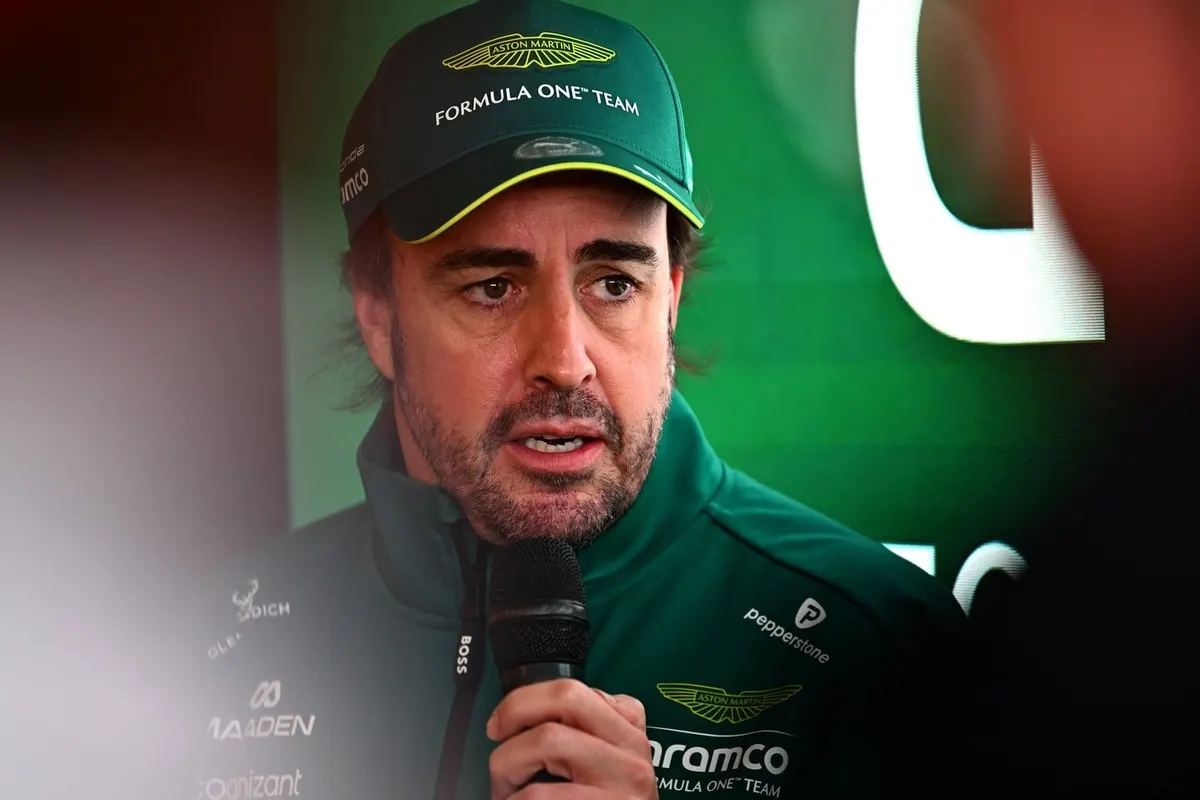
谁昨晚睡得最糟糕:费尔南多·阿隆索
在圣保罗周六表现出色之后,汽车又一次让阿隆索失望了
当费尔南多·阿隆索在2005年成为一级方程式世界冠军时,他只有24岁,取代了埃默森·菲蒂帕尔迪,成为赛车历史上最年轻的世界冠军。最后,迈克尔·舒马赫终于有了挑战者。尽管这位F1的统治者在一次误称这位年轻的西班牙公牛为"Ferdinando"时,因为他几乎记不起他的名字,但最终是阿隆索结束了舒马赫的黄金时代。
2001年的新秀班非常出色:阿隆索、胡安·帕布洛·蒙托亚、基米·莱科宁。巴西的恩里克·贝尔纳尔迪也参加了墨尔本赛季揭幕战,马来西亚的亚历克斯·杨和捷克车手托马斯·恩格后来加入了该赛季。这些名字在很大程度上已经消失在人们的视野中。但至少有50%的2001级学生后来取得了辉煌的成就。
一级方程式赛车在那时是一个完全不同的世界。车队老板是像罗恩·邓恩、弗朗克·威廉姆斯、爱迪·乔丹和汤姆·沃金肖这样的男人。如今的世界冠军梅赛德斯车队当时被称为BAR,红牛还是捷豹,阿兰·普罗斯的车队则运行着重新贴上电脑品牌宏碁标志的法拉利引擎。Facebook和Instagram还不存在,穿着比基尼和紧身短裤的网格女孩随意举着车手的号码,网格上仍然有像让-阿莱西和约斯·维斯塔潘这样的老将,以及马克斯·维斯塔潘的父亲。
任何当时预测阿隆索25年后仍将是一级方程式赛车中最优秀的车手之一,但永远不会赢得超过两个世界冠军的人,可能会被像默里·沃克或海因茨·普鲁勒这样的记者嘲笑为疯子。
我曾经在一家养老院服过兵役,每次我告诉我妈妈我的工作时,她都会说:"当人们变老时,他们又变成了孩子。"在某种程度上,这也适用于费尔南多·阿隆索。
2001年,他首次在一级方程式赛车中亮相,加入了明ини车队。澳大利亚航空公司企业家保罗·斯托达特买下了我们现在知道的红牛车队,阿隆索在一个17场比赛的季节中获得了零分,没有一级方程式短跑,并在10月14日在铃鹿的锦标赛决赛中。不是因为他的巨大才华已经不明显,而是因为机械根本无法胜任这项工作。
现在,作为一级方程式的资深人士,阿隆索发现自己处于与当年作为大奖赛新生儿时完全相同的情况:他的队友根本无法与他抗衡,没有人对他的驾驶能力表示怀疑,然而他却因为自己的赛车性能无法提升而绝望地被困在车队后方。
在这期间,他已经赢得了两个世界锦标赛、32个大奖赛胜利以及25年的生活经验。令人惊讶的是,几乎没有变化:阿隆索的速度超过了他的赛车。在24个比赛周末中的20个,他只获得了7分。只有2001年,在明尼迪车队,他的得分更少。
然而,在2005年他首次赢得世界冠军的地点——伊纳波利斯赛道,证明了阿隆索并没有失去从一级方程式赛车中榨取每一丝秒的能力。
当雨来临时,为那些驾驶竞争力较弱的赛车的车手打开了克服赛车不足的大门,阿隆索的出色表现显露无遗。在周六的排位赛中,他多次短暂地领跑,最终确保了本赛季首次进入Q3的资格。
在周日的比赛中,他甚至有时能与法拉利的刘易斯·汉密尔顿等车手一较高下。赛后,阿隆索表示,阿斯顿·马丁在湿滑的赛道上的表现必须是非凡的(诚然,本田引擎的表现则相对较差)。
也许吧。但问题是:只有在阿隆索手中,阿斯顿·马丁才表现得非凡。
周六,阿隆索展示了为什么他45岁仍然属于一级方程式。周日,阿斯顿·马丁则向他展示了为什么45岁的他可能更适合做其他事情。结果是第12名,没有积分。又一个周末,阿隆索证明了他车技超群,不适合他的赛车。
这一切应该足以抚慰他的自尊心,帮助他夜间睡得香甜。但无论阿隆索如何努力,无论有多少人怀疑他的能力,他第三次成为世界冠军并最终为这个在过去二十年里变成永无止境故事的童话故事画上圆满句号的几率都很小。
在一级方程式赛车中,很少有车手像他这样,在多年里为今天的大部分顶级车队参赛,或者至少在某些时候与他们有过交谈。在法拉利,他几乎触手可及地接近第三个世界冠军,但最终并未实现。在迈凯轮,他留下了烧焦的土地。两次。
他与红牛的谈话在2007年最为严肃,至少赫尔穆特·马克告诉我的是这样。红牛有阿德里安·纽维,但阿隆索似乎缺乏迪特里希·马特希茨大胆愿景的信心,即挑战既定车队和制造商的愿景能够成为现实。到红牛在2009年开始向一个非凡成功的时代迈进时,阿隆索已经在为转投法拉利做准备。
讽刺的是,几乎20年后,阿隆索现在将再次成为世界冠军的希望寄托在阿斯顿·马丁的阿德里安·纽维身上。这位多年前他似乎低估了在红牛潜力的设计师。这应该会是他长期承诺的传记中的精彩材料,我在2021年7月在亚马逊上预定了这本书,但时至今日,它仍未出版。
在2016年底,他在麦克拉伦-本田的漫长职业生涯中处于最低谷的时候,当他已经开始从心理上从一级方程式赛车中抽身时,当时的现世界冠军尼科·罗斯伯格突然宣布退役。就在那天晚上,在FIA颁奖典礼上,弗拉维奥·布里atore打电话给梅赛德斯车队负责人托托·沃尔夫,试图为阿隆索争取罗斯伯格空出的座位。但阿隆索在麦克拉伦-梅赛德斯车队期间烧毁了许多桥梁,戴姆勒首席执行官迪特·蔡舍并没有忘记"间谍门"。
有时阿隆索打开了错误的门。有时门被猛地关在他的脸上。有时他自己把门关得太用力,以至于多年后,门再也无法打开。
当阿隆索于2023年加入阿斯顿·马丁车队并在首个赛季立刻获得八个领奖台位置时,似乎他终于摆脱了坏运气的诅咒。今天,三年后,我们知道情况并非如此。如果他离开后车队多年后最终取得成功,这也不会让人感到惊讶。就像麦凯轮车队一样。
阿隆索并不总是不幸情况的受害者。有些门是他自己关上的。有些桥梁是他亲手烧毁的。
刘易斯·汉密尔顿,麦凯轮车队,费尔南多·阿隆索,麦凯轮车队
阿隆索并不是一个容易失眠的人。他经历过太多,取得过太多,向我们证明过太多,以至于仅仅因为他将永远无法在本生中获得第三个世界冠军而感到沮丧。然而,他的故事中却有着深深的遗憾。如果他像维特尔或汉密尔顿那样幸运,在正确的时间和地点找到了自己的位置,他现在可能已经拥有五次或更多的世界冠军头衔了。但他没有。
回到2001年,当阿隆索刚开始参加一级方程式赛车时,我读到的报纸文章总会不自觉地描述伟大的斯图尔特·莫斯爵士为从未赢得过世界冠军的最优秀的大奖赛车手。
也许在遥远的未来某个时刻,他们会将费尔南多·阿隆索描述为赢得过“仅仅”两次世界冠军的最优秀的大奖赛车手。
尽管如此,事情本可以更糟。
英文原文
Who slept worst last night: Fernando Alonso
Another case of the car letting Alonso down after a stellar Sao Paulo Saturday
When Fernando Alonso became Formula 1 world champion in 2005, he was just 24 years old, replacing Emerson Fittipaldi as the youngest champion in the sport's history. At last, Michael Schumacher had a challenger. And although the reigning king of F1 once mistakenly called the young Spanish bull "Ferdinando" because he couldn't quite remember his name, it was Alonso who ultimately brought Schumacher's golden era to an end.
The rookie class of 2001 was an exceptional one: Alonso, Juan Pablo Montoya, Kimi Raikkonen. Brazilian Enrique Bernoldi was also on the grid for the season opener in Melbourne, with Malaysia's Alex Yoong and Czech driver Tomas Enge joining later in the year. Names that have largely faded into obscurity. But at least 50 per cent of the class of 2001 went on to greatness.
Formula 1 was a very different world back then. Team bosses were men like Ron Dennis, Frank Williams, Eddie Jordan and Tom Walkinshaw. Today's world championship-winning Mercedes team was called BAR, Red Bull was still Jaguar, and Alain Prost's team ran a Ferrari engine rebadged in the name of the computer brand Acer. Facebook and Instagram didn't exist, grid girls in bikinis and skin-tight shorts casually held up the drivers' numbers, and the grid still featured old warhorses like Jean Alesi and Jos Verstappen, Max's father.
Anyone who had predicted back then that Alonso would still be among Formula 1's best drivers 25 years later, yet would never win more than two world championships, would probably have been dismissed as a lunatic by journalists such as Murray Walker or Heinz Prüller.
I once did my civilian service in a retirement home, and whenever I told my mother about my work, she would say: "When people get old, they become like children again." In a way, that applies to Fernando Alonso, too.
In 2001, he made his Formula 1 debut with Minardi. Australian airline entrepreneur Paul Stoddart had bought the team we now know as Racing Bulls, and Alonso scored precisely zero points in a 17-race season, with no F1 Sprints and a championship finale at Suzuka on 14 October. Not because his considerable talent wasn't already obvious, but because the machinery simply wasn't up to the job.
Now, as F1's elder statesman, Alonso finds himself in exactly the same situation as when he was a Grand Prix baby: his team-mate doesn't stand a chance against him, nobody seriously questions his ability behind the wheel, and yet he is hopelessly stuck towards the back because his car simply cannot deliver.
In between, there have been two world championships, 32 Grand Prix victories and a quarter of a century of life experience. Remarkably little has changed: Alonso is faster than his car. After 20 of 24 race weekends, he has just seven points to his name. Only in 2001, with Minardi, did he score fewer.
And yet Interlagos, the very place where he clinched his first world title in 2005, provided proof that Alonso has lost none of his ability to extract every last fraction of a second from a Formula 1 car.
When the rain arrived, opening the door for drivers in less competitive machinery to overcome their cars' shortcomings, Alonso's class shone through. During Saturday's qualifying session, he briefly topped the timesheets on several occasions, eventually securing his first Q3 appearance of the season.
In Sunday's race, he even found himself mixing it with the likes of Lewis Hamilton in the Ferrari at times. Afterwards, Alonso suggested that the Aston Martin must have been "phenomenal" in the corners on a wet track (the Honda engine, admittedly, rather less so).
Perhaps. But here's the thing: it was only phenomenal in Alonso's hands.
On Saturday, Alonso showed why he still belongs in Formula 1 at 45. On Sunday, Aston Martin showed him why, at 45, he might be better off doing something else. The result was 12th place. No points. Another weekend in which Alonso proved he is too good for his car.
All of which should be enough to stroke his ego and help him sleep soundly at night. But however hard Alonso tries, and however little anyone doubts his ability, the chances of him becoming world champion for a third time and finally writing a happy ending to a fairy tale that has turned into a never-ending story over the past two decades are slim.
There are few drivers in Formula 1 who, over the years, have raced for so many of today's top teams, or at least held talks with them at some point. At Ferrari, he came agonisingly close to a third title, but it never quite happened. At McLaren, he left scorched earth behind him. Twice.
His talks with Red Bull were at their most serious in 2007, or at least that's what Helmut Marko once told me. Red Bull had Adrian Newey, but Alonso apparently lacked the confidence that Dietrich Mateschitz's bold vision of taking on the established teams and manufacturers could actually become reality. By the time Red Bull began its rise towards an era of extraordinary success in 2009, Alonso was already preparing to move to Ferrari.
The irony? Almost 20 years later, Alonso is now pinning his hopes of becoming world champion again on none other than Adrian Newey at Aston Martin. The very designer whose potential at Red Bull he apparently underestimated all those years ago. It should make for fascinating material in his long-promised autobiography, which I pre-ordered on Amazon in July 2021 and which, to this day, has still not been published.
In late 2016, during one of the lowest periods of his long career at McLaren-Honda, when he had already begun to mentally move on from Formula 1, reigning world champion Nico Rosberg suddenly announced his retirement. That very evening, at the FIA prize-giving gala, Flavio Briatore called Mercedes team principal Toto Wolff in an attempt to secure Rosberg's vacant seat for Alonso. But Alonso had burned too many bridges during his time at McLaren-Mercedes, and Daimler CEO Dieter Zetsche had not forgotten "Spygate".
Sometimes Alonso opened the wrong door. Sometimes it was slammed in his face. And sometimes he had slammed it so hard himself that, years later, it could no longer be opened.
When Alonso joined Aston Martin in 2023 and immediately scored eight podium finishes in his first season, it seemed he had finally shaken off the curse of bad timing. Today, three years later, we know better. And it would hardly be surprising if the team eventually became successful years after his departure. Just as McLaren did.
Alonso wasn't always simply the victim of unfortunate circumstances. Some doors he closed himself. Some bridges he burned with his own hands.
Lewis Hamilton, McLaren, Fernando Alonso, McLaren
Alonso isn't someone who loses sleep easily. He has experienced too much, achieved too much and proved too much to all of us to get worked up simply because he will never win a third world championship in this lifetime. And yet there is something deeply regrettable about his story. Had he been as fortunate as Vettel or Hamilton in finding himself in the right place at the right time, he could probably have five or more world championships to his name by now. But he doesn't.
Back in 2001, when Alonso was starting out in Formula 1, the newspaper articles I read would invariably describe the great Sir Stirling Moss as the finest Grand Prix driver never to have won a world championship.
Perhaps, at some point in the distant future, they will write about Fernando Alonso as the finest Grand Prix driver ever to have won "only" two world championships.
Still, things could be worse.
Motorsport.com ·
内容来自公开信源,聚合内容版权归原作者与来源所有。