F1计划2030年减少客户车队,关键细节揭晓
F1计划在2030年将每个制造商的引擎供应量减少至两个,引发了对梅赛德斯当前三个客户车队状态的疑问。
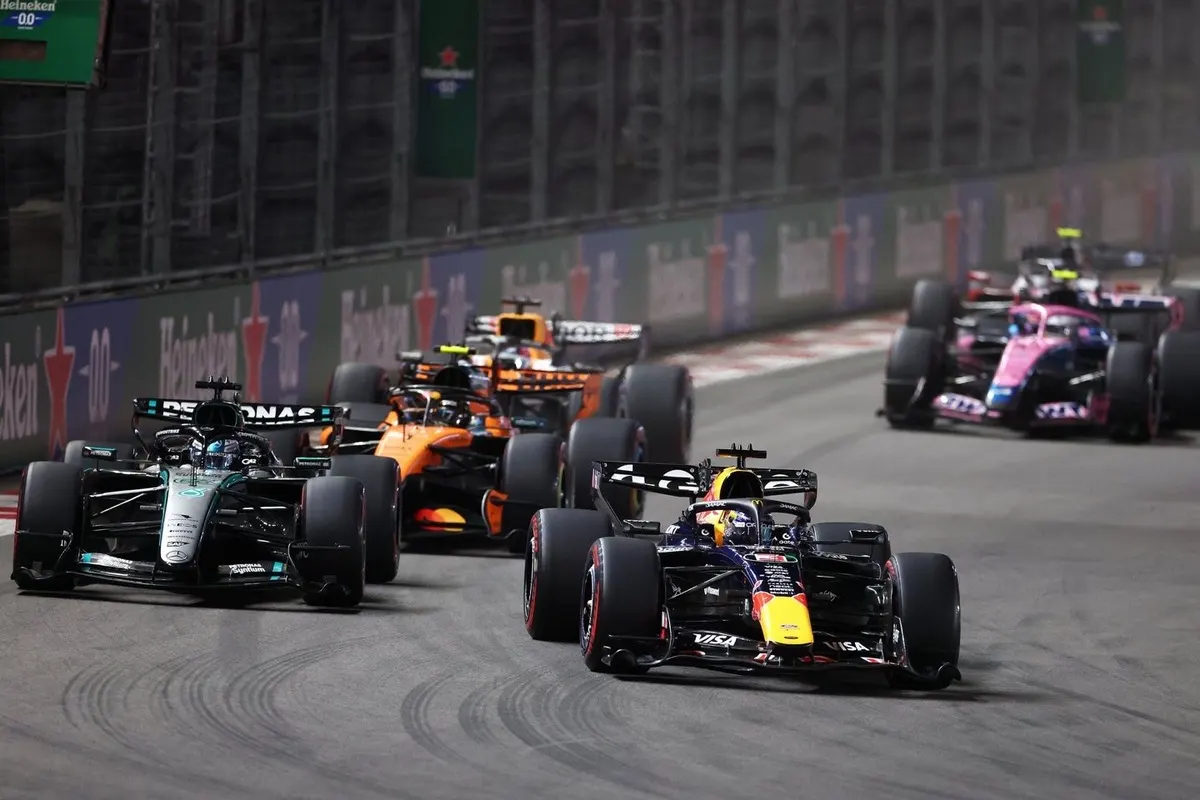
F1计划在2030年减少客户车队,随着关键细节的浮现
作为其2030年计划转向V8动力单元的一部分,一级方程式动力单元制造商将只为两支车队提供动力单元,这引发了关于梅赛德斯当前客户车队未来的政治阴谋
Motorsport.com了解到,F1计划在2030年每家制造商只提供两个动力单元,这引发了关于梅赛德斯目前三个客户车队状态的疑问
在拉斯维加斯周末,国际汽联宣布一致支持将下一代动力单元法规提前至2030年。这包括转向2.1升V8引擎,包括涡轮增压器,最大200千瓦的电力和可持续燃料的使用。
这项举措满足了对于更便宜、更简单的引擎的需求,这是国际汽联主席穆罕默德·本·苏莱姆和一级方程式主席斯蒂法诺·多米尼卡利共同追求的目标。同时,增加涡轮是奥迪等厂商的关键要求,这也确保了一级方程式在城市赛场的引擎噪音保持在合适的水平。
国际汽联发布的2030年框架广泛文件的一部分,但并未作为公开宣布的内容,是六家2030年动力单元制造商之间的一项协议,即每家厂商为两支车队提供动力单元,这也包括他们的厂队,仅剩一支车队可供外部客户车队使用。
Motorsport.com了解到,此举的一个目标是减少占据大部分车手阵容的制造商的政治影响力,在这种情况下是梅赛德斯-奔驰和法拉利,而相关制造商也愿意缩减规模,因为供应一级方程式引擎是一项亏损业务,供应量限制在每赛季仅1800万美元。
法拉利目前为厂队、哈斯和凯迪拉克提供动力单元,但后者将从2030年开始使用自家引擎,这意味着法拉利的供应问题将自行解决。红牛动力系统将为红牛车队和小红牛车队提供服务,而目前奥迪、阿斯顿·马丁的合作伙伴本田和凯迪拉克的股东通用汽车都将拥有他们唯一的确认客户——各自的厂队。
那留下了一个问题,梅赛德斯以及梅赛德斯高性能动力总成的客户将何去何从。在布拉克利克的工厂车队之外,布里克斯沃思运营目前正为麦克拉伦、威廉姆斯以及阿尔卑斯车队提供动力,而其母公司雷诺最近放弃了并出售了其内部发动机业务。
根据2030年的框架,如果国际汽联世界汽车运动理事会下个月在上海批准该提案,那么这三支车队中的两支将寻找新的发动机供应商。这一地震般的转变将在F1的 paddock中引发数月的政治阴谋,因为车队们争相确保自2014年F1转向混合动力引擎以来,一直是F1最可靠和性能最出色的动力单元供应商,或者与目前不那么受欢迎的选项达成交易。
Motorsport.com 了解到,麦克拉伦和威廉姆斯都希望继续与梅赛德斯合作。尽管麦克拉伦至少探索了成为自己的动力单元制造商的想法,当转向更便宜的公式会使这比现在更可行时,但首席执行官 Zak Brown 表示,2030年的船已经驶过,因为他希望继续作为梅赛德斯客户。
周四在拉斯维加斯,Brown 表示:“我们过去考虑过这件事,但我们非常满意高性能动力总成。我认为我们已经证明我们可以与他们赢得冠军,所以我们没有在车后放置任何东西的意图,除了梅赛德斯。”
Zak Brown关于麦凯轮自己制造引擎的想法:"这是我们过去考虑过的事情,但我们非常满意HPP。我认为我们已经证明我们可以和他们一起赢得冠军,所以我们没有打算在我们的车上安装除了梅赛德斯引擎以外的任何东西。"
梅赛德斯对其理想客户车队的样子目前还不太清楚。在2024年和2025年被麦凯轮击败后,首席执行官Toto Wolff坚持认为,客户队的胜利仍然是HPP和整个梅赛德斯品牌的荣耀,同时一个强大的客户车队也为工厂运营提供了一个有价值的底盘基准。
尽管Brown称赞HPP是一个"了不起的合作伙伴",但今年年初,由于工厂车队和客户之间在如何利用和部署复杂的新动力单元方面存在知识差距,HPP和麦凯轮之间的关系至少出现了一些紧张。
梅赛德斯是否会继续向其最强大的竞争对手租赁引擎,或者与中游车队达成协议是首选方案,这很可能会成为未来几个月内许多猜测的主题。
FIA提出的第三方引擎计划现在已经胎死腹中。随着2030年F1动力单元变得更加简单和便宜,FIA主席本·苏莱姆提出了一个想法,即采购一批现成的、白色标签的引擎,以进一步缓解对车队独立性的担忧。
然而,这个计划对任何潜在的引擎制造商来说似乎在经济上不可行,而现在所有六家PUM都一致同意2030年的关键基础设施,两个供应量的上限意味着至少有12个动力单元供应可供11支车队使用。
FIA还包含了一个安全网,以防其中一家制造商决定退出,增加了一条条款,即退出的制造商的F1动力单元知识产权将转让给FIA,然后FIA可以将其分配给新进入的制造商。
就像今天一样,还将有一个"供应义务",这意味着FIA可以强迫一家制造商向一个额外的第三支车队提供引擎,如果该车队无法安排找到引擎的交易,这可能最终成为一条关键条款。
国际汽联主席穆罕默德·本·苏莱姆和F1首席执行官斯蒂法诺·多梅尼卡利长期以来一直就F1动力单元的未来发展方向达成一致。
双方还就2030-2034期间的动力单元成本上限达成一致。该上限将保持在今天的1.9亿美元,到2030年,每年将减少750万美元,到2034赛季结束时降至1.6亿美元。
这种滑动比例有助于制造商承担新动力单元的初期开发成本。预计从2028年开始对当前引擎的开发进行冻结,以及在该年夏季之前禁止V8动力测试,这将有助于F1的现有制造商在两个项目之间管理资源。现有制造商还将比新来者通用汽车获得更多的成本上限空间,通用汽车现在可以放弃其V6计划,仅专注于夏洛特的V8项目。据了解,通用汽车将签署前几年的预算上限为1.7亿美元。
制造商仍有一些重要议题需要进一步细化,例如电动推杆系统的确切性质,因为它需要与底盘设计协同工作以促进激烈的比赛。
但是,通过定义整体框架和关键引擎架构,这些将由FIA世界汽车运动理事会批准,制造商和FIA现在可以按照合理的时间表开始着手下一轮规则周期的工作。
这应该有助于管理机构制定出与新型动力单元良好配合的车架规则,提供一套更加纯粹和刺激的规则,而无需面对适应原始设备制造商突然转变的困境,这原本导致了2026年妥协且受到批评的公式。
英文原文
F1 set to reduce customer teams as key 2030 details emerge
As part of its 2030 plan to V8 power units, Formula 1 power unit manufacturers are set to only supply two teams, prompting political intrigue over the future of Mercedes' current customer teams
F1 is planning a shift to just two power unit supplies per manufacturer in 2030, Motorsport.com has learned, raising questions over the status of Mercedes' three current customers.
Over the Las Vegas weekend the FIA announced there was unanimous support to bring the next generation of power unit regulations forward to 2030. That includes a move to 2.1-litre V8 engines, including a turbocharger, a maximum of 200 kilowatts of electric power and the use of sustainable fuels.
That move satisfies the demand for cheaper and less complex engines, which FIA president Mohammed Ben Sulayem and F1 chief Stefano Domenicali had been pursuing in unison. Meanwhile, adding a turbo was a key requirement for the likes of Audi and also ensures engine noise remains at a suitable level for some of F1's urban venues.
What was also part of a wide-ranging document the FIA produced on the 2030 framework, but wasn't part of the public announcement, is an agreement between the six 2030 power unit manufacturers to supply just two teams each. This also includes their works team, leaving just one single engine supply available for external customer teams.
Motorsport.com understands that one aim of the move is to reduce the political influence of manufacturers supplying a large share of the grid, in this case Mercedes and Ferrari, while the manufacturers in question had also been willing to downsize as supplying F1 engines is a loss making operation, with supplies capped at just $18m per season.
Ferrari is currently supplying the works team, Haas and Cadillac, but the latter will be moving to in-house engines from 2030, meaning the question of Ferrari's supply is solving itself. Red Bull Powertrains will also be taking care of two teams, Red Bull Racing and Racing Bulls, while at present Audi, Aston Martin partner Honda and Cadillac's shareholder General Motors will all have their own works teams as their one and only confirmed customer.
That leaves the question of what will happen to Mercedes and the customers of Mercedes High Performance Powertrains. Alongside the works team in Brackley, the Brixworth operation is currently supplying McLaren, Williams as well as Alpine, whose parent company Renault recently abandoned and sold its in-house engine operation.
Per the 2030 framework, two of those three teams would be looking for a new engine supply if the FIA World Motor Sport Council approves the proposal in Shanghai next month. That seismic shift will set up months of political intrigue in the F1 paddock as teams scramble to secure what has been F1's most reliable and performant power unit supplier ever since F1 moved to hybrid engines in 2014, or conclude deals with currently less desirable options.
Motorsport.com understands that both McLaren and Williams are fancying their chances of remaining with Mercedes. And while McLaren at least explored the idea of becoming its own power unit manufacturer when a move to a cheaper formula would make that more feasible than it is now, CEO Zak Brown indicated that ship has sailed for 2030 as he aims to remain a Mercedes customer.
"It's something we've looked at in the past, but we're very happy with HPP," Brown said in Las Vegas on Thursday. "I think we've proven that we can win championships with them, so we don't have any intention to have anything in the back of our car other than a Mercedes."
Zak Brown on the idea of McLaren building its own engines: "It's something we've looked at in the past, but we're very happy with HPP. I think we've proven that we can win championships with them, so we don't have any intention to have anything in the back of our car other than a Mercedes."
Mercedes' intentions about what its ideal customer team would look like are less clear right now. Having been beaten by McLaren in 2024 and 2025, CEO Toto Wolff maintained that a win for a customer is still a feather in the cap for HPP and the Mercedes brand as a whole, while a strong customer team also provides a valuable chassis benchmark for the works operation.
And while Brown hailed HPP as an "awesome partner", it's no secret that the relationship between HPP and McLaren has at least come under some strain at the start of this year amid a knowledge gap between the works team and its customer over how to exploit and deploy the complex new power units.
Whether Mercedes will continue to lease engines to its most formidable rival or whether a deal with a midfield team is the preferred option will likely become the subject of plenty of intrigue in the coming months.
What is certain is that the FIA's proposed third-party engine plan is now dead in the water. With F1 power units becoming less complex and expensive in 2030, FIA president Ben Sulayem had floated the idea of sourcing a supply of off-the-shelf, white label engines to further alleviate concerns over team independence.
However, that plan never seemed economically viable for any prospective engine builder, and with all six PUMs at the table now unanimously agreeing to 2030's key infrastructure, a cap of two supplies would mean there are at least 12 power unit supplies available for 11 teams.
The FIA did include a safety net in case one of the six manufacturers decides to drop out, adding a clause under which a departing manufacturer’s F1 power unit intellectual property would transfer to the FIA, which could then assign it to a new manufacturer coming in.
As is the case today, there will also be an "obligation to supply", meaning the FIA could force one of the manufacturers to supply an additional, third team with an engine if that outfit can't arrange a deal to find one, which may well end up becoming a key clause.
FIA president Mohammed Ben Sulayem and F1 CEO Stefano Domenicali have long been in agreement over the future direction of F1's power units.
What has also been agreed is the basis for the power unit cost cap for the 2030-2034 period. The cap will remain at today's figure of $190m for 2030 before falling by $7.5m per year, ending at $160m for the 2034 season.
That sliding scale helps manufacturers with the initial development cost of the new power units. A development freeze of the current engines from 2028, as well as a ban on V8 dyno testing until the summer of that year, is expected to help F1's current manufacturers manage their resources between the two projects. Existing manufacturers will also receive more cost-cap headroom than newcomer General Motors, which can now abandon its V6 plans and just focus on the V8 program in Charlotte. GM is understood to be signing up to a budget cap of $170m for the first couple of years.
There are still several important topics to be fleshed out further by the manufacturers, such as the exact nature of the electric push-to-pass system as it would need to work in conjunction with the chassis design to promote close racing.
But by defining the overarching framework and key engine architecture, which will be rubber stamped by the FIA World Motor Sport Council, both the manufacturers and the FIA can now get to work on the next rules cycle on a reasonable timeline.
That should help the governing body come up with chassis regulations which are tuned to work well with the new power units and deliver a more pure and exciting set of rules, without facing the prospect of having to adapt to late U-turns by OEMs, which led to 2026's compromised and criticised formula to begin with.
Motorsport.com ·
内容来自公开信源,聚合内容版权归原作者与来源所有。